If you’ve ever popped the hood of a modern car, ran your fingers along a sleek interior door panel, or adjusted a vent that clicks into place with satisfying precision, you’ve interacted with a component that probably relied on insert molding. As a supplier of automotive injection molded components, I’ve spent nearly two decades troubleshooting, refining, and perfecting this process to meet the extreme demands of the automotive industry—and I can tell you, it’s far more than just a manufacturing trick. It’s a solution that solves some of the trickiest challenges automakers face every day, from reducing weight to streamlining assembly to boosting part durability in the harshest driving conditions. Automotive Injection Molded Components
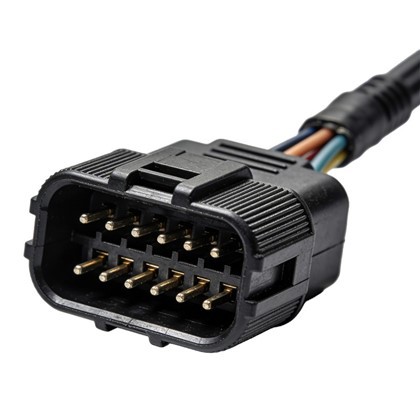
Let’s start with the basics, because insert molding is often confused with standard injection molding, and the difference is where the magic happens. Standard injection molding works by heating plastic resin until it’s molten, then injecting it under high pressure into a custom-made mold cavity, where it cools and hardens into a single, solid part. Insert molding? It swaps that simple process for a two-step (or sometimes single-step) sequence where pre-manufactured components—called “inserts”—are placed into the mold before the molten plastic is injected around them. The plastic fuses permanently to the insert as it cools, creating one cohesive part instead of multiple parts that would later need to be fastened together.
Those inserts aren’t random, either. For automotive applications, they’re almost always metal—think steel pins, brass threaded inserts, aluminum brackets, or even copper wiring harness segments. Sometimes they can be other plastics, but metal is far more common in automotive because it adds strength, provides conductive pathways for electronics, or creates mounting points that can support heavy loads without warping. I’ve worked on parts as small as a climate control knob insert and as large as a door latch assembly, and every single one uses inserts tailored to its job.
Now, why go through all the extra effort of placing inserts manually or with automated systems instead of just molding the whole part from plastic? For the automotive industry, the answer comes down to three non-negotiables that shape every part we make: quality, cost efficiency, and speed to market. Let’s break those down.
First, quality. Automotive components have to last 10, 15, even 20 years, enduring temperature swings from -40°F in northern winters to 180°F under a dashboard on a summer day, vibrations from rough roads, and exposure to oil, gasoline, and road salt. If you fasten a metal bracket to a plastic panel with screws, over time that screw can loosen, plastic can crack around the hole, or corrosion can set in at the metal-plastic interface. Insert molding eliminates that weak point entirely. The molten plastic bonds chemically to the surface of the insert as it cools, creating a seamless joint that’s far more resistant to stress and environmental damage. A few years back, one of our clients, a major auto OEM, was dealing with 12% warranty claims on their interior door handles because the mounting screws were coming loose. We redesigned the handle to use brass threaded inserts molded directly into the plastic, and those claims dropped to less than 0.5% within a year. That’s the kind of impact insert molding has.
Second, cost efficiency. Assembling a component from multiple parts requires extra labor, extra fasteners, extra quality checks to make sure no parts are misaligned, and extra warehouse space to store all those separate pieces. Insert molding combines those steps into one. Instead of molding a plastic bracket, drilling holes in it, sourcing separate metal inserts, packaging both, and sending them to an assembly line to be screwed together, we mold the insert right into the plastic during one production run. That cuts assembly time per part by as much as 40% in some cases, and reduces the number of defective parts from misaligned fasteners or incorrect insert sizing. For high-volume automotive production, that adds up to millions of dollars in savings every year. I’ve seen clients go from assembling 10,000 parts a week with three assembly lines to producing 15,000 parts a week on a single line, just by switching to insert molding.
Third, design flexibility. Modern cars are packed with electronics: infotainment systems, advanced driver-assistance sensors, climate controls, electric vehicle powertrain components. A lot of these parts need to combine structural support with electrical conductivity. Molding a plastic part around a copper wire insert lets us create a single component that holds its shape and carries electrical current, eliminating the need for separate wiring harnesses and connectors. We’ve even done insert molding for high-voltage EV battery connectors, where we mold a hard, heat-resistant plastic around copper terminals to insulate them while creating a rigid, shatter-resistant housing that can withstand the extreme vibration of a moving vehicle. Without insert molding, those connectors would be bulky, prone to damage, and far harder to install.
Of course, it’s not all smooth sailing. Insert molding comes with unique challenges that only experienced suppliers can solve. The biggest one is mold design. The mold has to hold the insert exactly in place during injection—even a tiny shift of 0.1 millimeters can ruin a part’s fit or create a weak bond. That means precision-machined cavities, often with custom pins or clamps to hold inserts in place, and simulations to test how the molten plastic will flow around the insert without shifting it. We use advanced mold flow software that lets us simulate thousands of injection scenarios before we even cut a single steel mold, which cuts down on prototype errors and saves our clients months of lead time.
Another challenge is material compatibility. Not all plastics bond well to all inserts. For example, polypropylene, a common plastic for interior automotive parts, doesn’t stick well to smooth brass inserts on its own. We have to treat the insert surface with a plasma or chemical etching process to create tiny, rough textures that the molten plastic can flow into, creating a mechanical bond that’s just as strong as a chemical one. Skip that step, and the insert could pull out of the plastic during stress testing—catastrophic for a part like a brake pedal. We test every insert-plastic combination for tensile strength, temperature resistance, and corrosion before we go into full production, a step that’s non-negotiable for automotive regulatory standards like IATF 16949.
Then there’s the issue of insert handling. For small, high-volume inserts, manual placement is slow and error-prone, so we use robotic insert loading systems that can pick up dozens of inserts per minute, place them with millimeter precision, and even inspect each insert for defects before it goes into the mold. For larger, more complex inserts, like a metal bracket for a under-hood component, we work with our clients to integrate the insert’s manufacturing process right into our production line, so we can source, inspect, and load inserts without slowing down our cycle time.
Let’s talk about real-world applications, because that’s where insert molding proves its value beyond the lab. Take an electric vehicle (EV) charging port housing. It needs to be rigid enough to hold the charging connector, heat-resistant to handle the heat from fast charging, and corrosion-resistant to stand up to rain and road grime. We use a glass-filled nylon plastic molded around a steel insert that forms the mounting points for the charging latch. The insert molding process creates a seamless, waterproof seal around the latch, so there’s no chance water can get into the electrical connections inside the port. That’s a part that’s tested to withstand 1,000 charge cycles, temperatures from -40°F to 200°F, and spray from a high-pressure hose—all made possible by insert molding.
Or take a traditional car’s ignition switch housing. It needs to contain electrical contacts, a plastic actuator, and metal brackets that connect to the steering column. Instead of assembling three separate parts with screws, we mold a brass insert for the electrical contacts and a steel insert for the steering column mount directly into the polycarbonate housing. That cuts the part’s weight by 25%, reduces assembly time, and makes the part far more resistant to the wear and tear of turning a key thousands of times. We’ve supplied that exact part to three major automakers for over a decade, and we’ve never had a field failure related to the insert bond.
As automotive technology evolves, insert molding is evolving too. The rise of EVs and advanced driver-assistance systems (ADAS) is creating demand for even more complex insert molded components: parts that combine multiple metal inserts, flexible wiring, and lightweight, high-performance plastics all in one. We’re currently working on a sensor mount for a new ADAS system that uses three different metal inserts, two copper wiring segments, and a carbon fiber-reinforced plastic to create a part that’s 30% lighter than the previous aluminum mount, with better vibration resistance and lower production cost.
Another growing area is insert molding for sustainable automotive parts. More automakers are switching to recycled or bio-based plastics, and insert molding is key to making those plastics work for structural components. Recycled plastics don’t always have the same bonding properties as virgin plastics, but with surface treatment technology and advanced mold design, we can create insert molded parts from 100% recycled plastic that meet the same strength and durability standards as parts made from virgin materials. That’s a big win for both our clients and the environment.
I know a lot of new clients come to us confused about when insert molding is the right choice, versus standard injection molding. Here’s a simple rule of thumb: if your part has metal inserts that need to be permanently bonded to plastic, if you’re looking to reduce assembly steps, if you need better strength or durability than a standard molded part, or if you’re working on an electrical component that needs conductive pathways, insert molding is almost always the better option. If you’re making a simple, non-structural trim piece with no inserts, standard molding will work, but you’ll miss out on the cost and quality benefits of insert molding.
That said, it’s not a one-size-fits-all process. Every automotive component has unique requirements, so we work closely with each client to design a custom insert molding solution. We start with a consultation to understand their part’s performance needs, production volume, budget, and timeline, then we do initial mold flow simulations, prototype the part, run testing for strength, temperature resistance, and corrosion, and refine the design until it meets their standards. We handle everything from small-batch prototypes for new model development to high-volume production for full vehicle runs, so whether you’re an OEM launching a new EV or a tier 1 supplier sourcing replacement parts, we have the experience to deliver.
At the end of the day, insert molding is about more than just manufacturing parts—it’s about solving problems that make cars safer, more reliable, and more cost-effective to produce. As someone who’s been in this industry for almost two decades, I’ve seen firsthand how a well-designed insert molded component can turn a design flaw into a competitive advantage, cut warranty costs by millions, and help bring a new vehicle to market months faster. That’s why we invest so much in refining this process: because for the automotive industry, every small improvement in a component’s design can have a big impact on the driver’s experience.
If you’re working on a new automotive component, or if you’re looking to improve the quality, cost, or lead time of your current injection molded parts, let’s connect. We can walk through your project, discuss your needs, and show you how insert molding can help you meet your goals.
Automotive Injection Molded Components References
- IATF 16949:2016, Automotive Quality Management Systems Requirements
- Rosato, D. V., & Rosato, M. G. (2000). Injection Molding Handbook. Kluwer Academic Publishers.
- Kraft, E. M. (2012). Insert Molding Fundamentals for Automotive Applications. Society of Plastics Engineers Automotive Division.
- SAE International. (2018). Physical Testing of Plastic-Metal Hybrid Components for Vehicle Structural Applications. SAE International Technical Paper Series.
Modelon Precision Industry (Suzhou) Co., Ltd.
With abundant experience, we are one of the most professional automotive injection molded components manufacturers and suppliers in China. Welcome to buy customized automotive injection molded components at competitive price from our factory. If you have any enquiry about pricelist, please feel free to email us.
Address: 1st Floor, Building 22, No. 2628 North Gate Road, Kunshan City, Jiangsu Province, P.R.China
E-mail: jessica_huang2025@163.com
WebSite: https://www.modeloncn.com/
