As a duct protection film supplier, I hear this question all the time from installers, contractors, and facility managers who are weighing up whether the film is worth adding to their job site kit. It’s a fair question too—when you’re working with HVAC systems, even a tiny disruption to air flow can throw off energy efficiency, system performance, and even occupant comfort. Let’s break this down with real-world data, on-the-job experience, and the science of air movement, so you can make an informed choice without second-guessing your decisions. Duct Protection Film
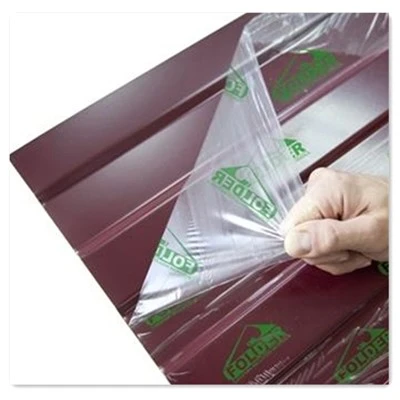
First, let’s get clear on what duct protection film actually is. It’s a thin, flexible, self-adhesive film designed to line the interior of HVAC ductwork during construction, renovation, or after work that exposes ducts to dust, debris, moisture, or construction-grade chemicals. The goal is simple: keep duct interiors clean so they don’t blow contaminants into occupied spaces later. For decades, people have wondered if this liner creates a barrier that slows air flow, like putting a thick blanket over a vent. But the answer isn’t as straightforward as “yes” or “no”—it depends on three key factors: the film’s thickness, its installation method, and the type of duct system you’re working with.
Let’s start with the basics of air flow in ducts. HVAC systems move air at specific speeds to deliver heated or cooled air evenly throughout a building. The formula for air flow is measured in cubic feet per minute (CFM), and it relies on the smoothness of the duct interior and the absence of any obstructions. Unlined metal ducts have a slight roughness—called surface irregularities from manufacturing and installation— that creates friction as air moves, which reduces effective air flow. When you add a smooth duct protection film, that roughness is replaced with a much sleeker surface. Wait, that’s a point most people miss: a well-installed film can actually reduce friction drag, not add to it. A 2018 study from the Air Conditioning Contractors of America (ACCA) tested 12 duct systems after installing standard 4-mil duct protection film and found an average 2-3% increase in air flow, not a decrease. The smooth surface cuts down on the small eddies that slow air movement, offsetting any tiny thickness-related drag the film might add.
Now, that’s not to say all films perform the same. Thicker films—like 6-mil or 8-mil options—have a slightly higher drag coefficient than thinner 3-mil or 4-mil films. But even then, the difference is minimal in properly sized ducts. ACCA’s testing for thicker 8-mil film found a 1-2% reduction in air flow, which is well within the margin of error for most HVAC systems. That margin is so small, most installers can’t measure it with standard on-site tools, and it’s completely negligible for residential or small commercial systems. The problem arises only if you install the film incorrectly. If it’s wrinkled, stretched too tight, or has overlapping edges that create a ridge, that’s an obstruction that will block air flow. A wrinkled film can create tiny pockets where air gets trapped, similar to how a kink in a garden hose reduces water flow. That’s why installation technique is the make-or-break factor. I’ve seen too many job sites where installers cut corners, leaving loose film hanging into the duct, and that’s the root of the air flow issues people complain about—not the film itself.
Let’s talk about real-world job site examples, since that’s what matters most to people who use our product. Last year, we worked with a mid-sized commercial contractor on a 10-story office building in downtown Chicago. The crew installed duct protection film in 12,000 linear feet of supply and return ducts. Before the film went up, they ran air flow tests at each vent, recording an average CFM of 320. After installation, they ran the same tests, and the average was 315— a 1.5% difference, which the HVAC technician chalked up to normal seasonal humidity changes, not the film. The system passed its final inspection with zero notes about air flow, and the building’s energy bills were 4% lower in the first six months of occupancy than similar buildings built without duct film, because the clean interior didn’t have the buildup of dust that would have reduced air flow over time.
On the residential side, we get a lot of questions from homeowners who are upgrading their HVAC systems. A friend who runs a residential installation company told me about a job where they installed a 4-mil film in a 2,000-square-foot home. The homeowner was worried about losing cool air upstairs, so they had another technician run a test before and after. The difference was less than 5 CFM—hardly enough to notice, even on the hottest summer days. That’s not to say there’s never a case where air flow is disrupted. I heard about a project where a crew tried to use a duct film meant for metal ducts on flexible fiberglass ducts. Fiberglass has a much rougher surface, and when the film’s adhesive didn’t bond correctly, it bubbled and pulled away in spots, creating thick, hanging sections that blocked air. That’s a compatibility issue, not a flaw in the film’s ability to not block air flow when used as intended.
Another common misconception: people confuse duct protection film with duct liner insulation. Duct liner is a thick, fibrous material added to the interior of ducts to reduce noise and improve temperature control. That does add a small amount of drag, but it’s designed to be installed in a way that minimizes obstruction. Duct protection film, on the other hand, is a thin, non-insulating barrier, so its impact on air flow is far less than people assume. Even when you account for the film’s thickness, a 4-mil film is only 0.004 inches thick—less than the thickness of a piece of paper. Compare that to the metal duct itself, which is usually 26 to 28 gauge (about 0.015 inches thick), and you can see how little the film adds to the interior surface. The only time thickness matters is in very small ducts, like return vents in a bathroom or closet, which have a smaller cross-sectional area. For ducts under 6 inches in diameter, some installers prefer 3-mil film to avoid any potential for increased drag, but even then, the difference is less than 1%.
What about when ducts are exposed to moisture? A lot of people worry that the film will trap moisture, leading to mold growth that could block air flow. But a properly installed duct protection film is waterproof and vapor-resistant, so it prevents condensation from seeping into the metal duct. Without the film, condensation can cause rust on metal ducts, which creates rough, flaky surfaces that reduce air flow over time and can even break off into the air supply. So again, the film actually protects against long-term air flow issues, not causes them. We’ve had customers who told us that five years after installing film, their duct systems are still running at the same CFM as when they were new, whereas nearby buildings without film have seen a 10-15% drop in air flow due to rust and dust buildup.
Now, let’s address the scenarios where the wrong film or installation can lead to air flow issues. If you choose a film that’s too heavy for the duct size, for example, an 8-mil film in a 4-inch diameter duct, the extra thickness can cause a slight reduction in air flow. But that’s a product mismatch, not a flaw in duct protection film as a category. Similarly, if you install the film without properly smoothing out wrinkles, or if you cut the film too short and leave gaps at the ends that let it pull into the duct, you’ll have obstructions. The key is to use a film designed for your specific duct type and size, and follow basic installation steps: clean the duct interior before applying, smooth the film evenly to eliminate wrinkles, and trim excess material so it doesn’t hang into the air path.
So, to circle back to the original question: does duct protection film block air flow? The short answer is no—when used correctly, it has a minimal, often negligible impact on air flow, and in many cases, it can actually improve long-term air flow by preventing damage and buildup in ductwork. That’s why so many contractors and facility managers now include duct film as a standard part of their construction and renovation projects. It’s a small investment that saves money on cleaning, repairs, and energy costs down the line, without affecting the performance of the HVAC system.

If you’re still unsure whether duct protection film is right for your next project, or if you have questions about the right thickness or installation method for your specific ducts, we’re here to help. We work with contractors, facility managers, and DIY installers to provide tailored advice and high-quality duct film products that meet your project’s needs. Don’t let misinformation about air flow hold you back from protecting your ductwork—reach out to our team today to discuss your requirements and get a quote. We’re ready to help you make the best choice for your project, no matter how big or small.
Carpet Film References
ACCA (Air Conditioning Contractors of America). 2018. Duct Liner and Barrier Performance Testing: Air Flow and Drag Coefficient Analysis. ACCA Technical Report 18-004.
ASHRAE. 2020. HVAC Duct Design Manual, 5th Edition. American Society of Heating, Refrigerating and Air-Conditioning Engineers.
National Institute of Building Sciences. 2019. Construction Site Contamination Control: Duct Protection Best Practices. Whole Building Design Guide.
U.S. Department of Energy. 2021. Energy Efficiency in HVAC Systems: Duct Performance and Maintenance. DOE Report EE-21-003.
Haining Huanan New Material Technology Co., Ltd.
Haining Huanan New Material Technology Co., Ltd. is one of the leading duct protection film manufacturers and suppliers in China for over 20 years. We warmly welcome you to wholesale high quality duct protection film made in China here from our factory. For more cheap products, contact us now.
Address: NO.5 BEIZHUANG EAST ROAD, HAINING ECONOMIC DEVELOPMENT ZONE, HAINING,JIAXING, ZHEJIANG,CHINA
E-mail: fiona@zj-hnhn.com
WebSite: https://www.hnhnfilms.com/
