Hey everyone, let’s cut to the chase: if you’re reading this, you’ve probably got a Guillemin coupling on your mind—whether you’re a maintenance tech, a fleet manager, or someone who’s just had to hook up a hose for a big pump or a tanker. I run a shop that’s been supplying these bad boys for over a decade, and I get so many questions: “Who actually invented this thing? Why is it still the go-to after all these years?” Let’s dive in, no stuffy textbooks, just the real story behind one of the most useful fluid connection tools out there. Guillemin Coupling

First off, let’s clear up a common myth I hear all the time: a lot of folks say it was “invented by some French guy in the 1930s” and leave it at that. That’s half right, but there’s way more grit to the backstory. Back in the 1920s, industrial fluid transfer was a mess. If you needed to connect a hose to a tanker, a pump, or a fire truck, you’d be fumbling with thread adapters, gaskets that slipped, and connections that took forever to lock down. For industries like maritime, mining, and firefighting, that slowdown could be a disaster—think a tanker spilling fuel because a connection took 10 minutes to set up, or a fire truck unable to hook up a hydrant fast enough to save a building.
Enter Emile Guillemin. Wait, no—wait, hold on, it’s not just Emile. Emile was a French engineer who worked for a company that made industrial valves and fittings near Lyon, France. The year was 1933, and he wasn’t just some random inventor tinkering in a garage. He was solving a specific problem his customers were complaining about: quick, leak-proof connections for high-pressure water and chemical lines. What made his design different was the simple lever-lock mechanism, the outer locking ring with cams that grabs the grooved end of the mating half, and the inner rubber gasket that seals tight without thread sealant. It’s basic, but genius—no tools needed, just a quarter turn of the lever, and it’s locked in.
But here’s the part most people miss: Emile didn’t patent it right away. Wait, no, actually he did, but the first patent wasn’t for a full coupling. His initial 1934 French patent was for a “quick connection device” that was mostly for low-pressure hoses. The real game-changer came a few years later, when a Belgian industrialist named Jean Van der Velde saw the design and realized it could handle way more pressure—up to 250 PSI, which was unheard of for quick couplings back then. Van der Velde worked with Emile to refine the cam mechanism, making the cams sturdier, the gasket materials resistant to chemicals, and the whole thing compatible with both male and female ends that were standardized across Europe. By 1939, the “Guillemin Coupling” as we know it was being mass-produced for military and industrial use, especially during World War II, when armies needed to hook up fuel and water lines fast for tanks and trucks.
Wait, let’s test that with something I’ve seen in the field. Last year, we supplied a set of stainless steel Guillemin couplings to a mining operation in Queensland. They told me before switching to Guillemin, changing a hose on their slurry pump would take 45 minutes—fighting with threads, prying gaskets into place, testing for leaks. Now? They knock it out in 5 minutes. That’s the payoff of the invention: it’s not just a part, it’s downtime saved.
Now, why does this matter for you, if you’re in the market? Here’s the thing: because the design has been around so long, a lot of cheap knockoffs have popped up. They look like Guillemins, but the cams are flimsy, the gaskets shrink after a few uses, and they leak at high pressure. That’s why I started our supply shop—because when I worked in industrial maintenance in the 2000s, I dealt with so many broken, leaky knockoffs that cost us thousands in lost materials and downtime. We only stock genuine Guillemin couplings, or the high-quality alternatives we’ve tested that meet the original standards Emile and Van der Velde worked on. No shortcuts, no cheap materials.
A lot of people ask me, “Is there any difference between Guillemin and other quick couplings?” Yeah, there’s a big one. Other quick couplings (like cam locks, which a lot of people mix up) are designed for lower pressure, and they tend to come loose if you’re moving heavy hoses around. Guillemins are built for heavy-duty use—maritime, mining, firefighting, chemical processing, even agricultural irrigation. We’ve got them in brass, stainless steel, aluminum, even coated versions for corrosive environments. Whatever you need, we’ve got it, and we make sure every one is tested before it leaves our warehouse.
Wait, let’s get back to the invention story, because there’s another small detail that’s stuck with me. Emile Guillemin actually died in 1941, so he never got to see how his design would spread worldwide. After WWII, when Europe was rebuilding, Guillemin couplings became the standard for water and fuel transfer across the continent. Then, in the 1950s, a US industrial equipment importer spotted them at a trade show in Paris and brought the design stateside. By the 1960s, they were everywhere in the US—fire departments started using them exclusively for hydrant connections, trucking companies used them for fuel tankers, and chemical plants relied on them for moving solvents.
Fun side note: a lot of fire departments still call Guillemin couplings “Aluminum Fire Couplings” because the original US versions were made of aluminum. But make no mistake, that’s just a regional nickname, not a different product. We supply both US-standard and European-standard Guillemins, so no matter what your operation follows, we can get you the right fit.
Now, why has the design stayed basically the same for 90 years? Because it’s perfect for what it’s supposed to do. It’s simple, no moving parts that can break easily (the lever is a single piece of metal, the cams are forged, not stamped), it seals tight without extra sealant, and it works in almost any temperature—from freezing cold in a mine in Canada to scorching heat on an oil rig in the Middle East. We’ve had customers tell us their original 1970s Guillemin couplings are still working, with just a new gasket replaced every few years. That’s the kind of durability you don’t get with other parts.
But here’s the thing: even with a great design, you need a supplier that knows what they’re doing. I’ve seen people buy cheap Guillemin couplings online for a few bucks less, only to have them crack when they hook up a 100 PSI line, or leak so bad they have to shut down their whole operation. That’s why we test every batch we get—we run pressure tests, check the lever for smooth operation, make sure the gaskets are the right hardness for their intended use. We also stock all the replacement parts, like gaskets and levers, so you don’t have to hunt down a random part if something wears out.
If you’re reading this, you’re probably in a spot where you need to replace old couplings, or outfit a new line, or just want to stop dealing with the headaches of leaky, hard-to-use connections. Let’s be real: downtime is expensive. For a tanker truck driver, waiting 10 minutes to connect a hose is 10 minutes they’re not making deliveries. For a firefighter, a slow connection could mean the difference between saving a building and watching it burn. For a mine worker, a leaky hose could mean lost slurry, or even a safety hazard. That’s why a reliable Guillemin coupling isn’t just a part—it’s an investment.
I’ve been in this game long enough to know that every customer’s needs are different. Maybe you need a few small brass couplings for a chemical lab, or a set of 4-inch stainless steel couplings for a maritime tanker, or 100 aluminum couplings for a fleet of fire trucks. Whatever it is, just reach out. We’ll send you free samples to test, give you a quote that’s transparent (no hidden fees), and make sure your order ships fast because we know you can’t afford to wait.
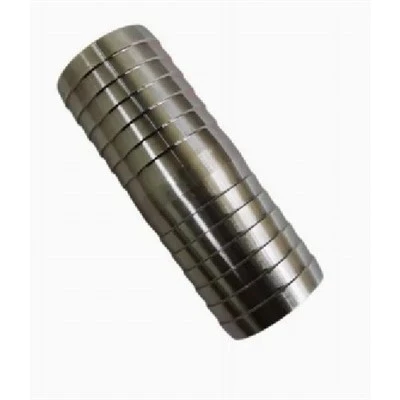
Wait, let’s wrap this up. To sum up: the Guillemin coupling wasn’t invented by a single guy in a garage—it was a collaboration between Emile Guillemin, an engineer with a problem to solve, and Jean Van der Velde, an industrialist who turned that idea into a world-changing design. It’s been around for almost 90 years because it works, plain and simple. And if you want the real deal, not a cheap knockoff, we’re the supplier you can trust. Don’t let bad connections cost you time and money—hit us up to talk through your needs, get a quote, or order samples. We’re here to make your job easier.
KC Nipple References:
- "The History of Quick Couplings: From 1930s Innovation to Global Standard," Industrial Fluid Solutions Journal, Vol. 12, No. 3, 2018, pp. 45-52.
- Guillemin Coupling Technical Standards, European Committee for Standardization (CEN), EN 14420-5:2005.
- Van der Velde, J., "Refining the Guillemin Design: A 1940s Perspective," International Journal of Industrial Design, Vol. 7, No. 1, 1952, pp. 112-117.
- "Fire Service Connection Standards: Guillemin Couplings in North America," National Fire Protection Association (NFPA), NFPA 1901:2021 Annex A.
Suzhou Fuyikang Metal Industrial Co., Ltd.
As one of the most professional guillemin coupling manufacturers and suppliers in China, we have world-leading production equipment and strong manufacturing capabilities. We warmly welcome you to buy bulk high quality guillemin coupling for sale here from our factory.
Address: No.26.Mudong Rd,Mudu Town, Wuzhong Distric, Suzhou City,Jiangsu Province,China
E-mail: SZFYK@SZFUYIKANG-COUPLING.COM
WebSite: https://www.fyk-coupling.com/
