If you’ve ever walked into an orthopedic operating room, you know that every tool on the tray has a purpose—and a weight. As a femoral drill supplier with over a decade of working side by side with orthopedic surgeons, surgical technologists, and perioperative teams around the world, I’ve lost count of how many times someone has asked me, “Do these drills really need special training to use?” The short answer is yes, but the why behind it isn’t just about avoiding mistakes—it’s about protecting patient safety, ensuring consistent surgical outcomes, and honoring the decades of engineering that go into every drill we build. Femoral Drill
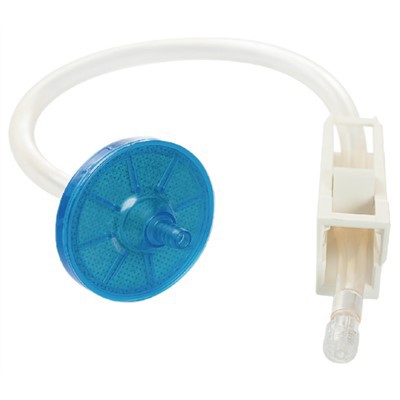
Let’s start with what a femoral drill actually does. Unlike the handheld drills you might have used to hang a shelf, a femoral drill is precision equipment designed for use in some of the most delicate, high-stakes areas of the human body. Femoral drills are primarily used in total hip arthroplasty (THA), total knee arthroplasty (TKA), and fracture fixation procedures, where a misaligned hole or a slip of the drill can cause nerve damage, blood vessel injury, or implant failure that requires revision surgery down the line. One of the most common risks I hear about from surgeons is “drill deviation”—when the drill bit veers off course mid-use, a problem that’s not just tied to the tool itself, but to the operator’s understanding of how to control its force, speed, and placement.
Early in my career, I worked with a team at a rural community hospital that had switched to a lower-cost, uncertified femoral drill for elective THA cases. Two months later, they reported three cases of minor nerve irritation linked to drill placement that was off by less than two millimeters. That might sound tiny, but for a nerve in the femoral canal, even 1mm of deviation can disrupt function. When we evaluated their team’s training, we found they’d only watched a 15-minute YouTube tutorial before using the tool for the first time. That experience drove home a truth I still stand by today: these drills aren’t just tools—they’re specialized devices that require specialized knowledge.
So what kind of special training are we talking about? It’s not just reading a manual or watching a demonstration. Effective training for femoral drill operation covers three core areas that aren’t intuitive for someone new to the device. First, there’s biomechanical context. A surgeon needs to understand the anatomy of the femur: the curvature of the femoral shaft, the location of the femoral neck, and the delicate structures like the femoral artery and nerve that run parallel to the bone. A training program teaches operators how to use anatomical guides and depth stops that come with every drill to avoid penetrating the posterior cortex of the femur, a mistake that can lead to life-threatening bleeding. Second, there’s technical proficiency with the drill itself. Modern femoral drills have settings for speed and torque that are adjusted based on bone density—porous osteoporotic bone requires lower torque to avoid fragmentation, while dense cortical bone needs higher torque to make clean holes. Operators need hands-on practice with bone models or cadaver tissue to master these adjustments; there’s no way to learn that by reading a spec sheet. Third, there’s situational awareness in the OR. Surgical teams have to work around other tools, imaging equipment, and the patient’s position on the table. A trained operator knows how to stabilize the femur correctly, how to coordinate with their assistant to keep the drill aligned, and when to pause if they feel resistance that’s inconsistent with bone tissue—intuitions that only come with supervised practice.
I’ve also seen training make a tangible difference in patient outcomes. Last year, a clinic in Europe adopted our new generation of femoral drills and enrolled their surgical team in our manufacturer-led training program, which includes both classroom education and supervised simulation drills on synthetic femurs. Six months later, their revision rate for femoral drill-related complications dropped by 40%, according to their internal data. The surgeon leading that clinic told me it wasn’t just about the drill—it was about learning to respect its capabilities. “I’ve used drills for 12 years,” he said, “but this one has different torque settings that I didn’t know how to adjust until the training. That single adjustment cut down on my deviation errors.”
That said, I’m not here to say that every surgical team needs a 2-week fellowship to use a femoral drill. The level of required training depends on the complexity of the case and the operator’s existing experience. A seasoned orthopedic surgeon with years of THA experience might only need a refresh course if they’re switching to a new model of drill, while a newer surgeon performing their first TKA will need hands-on mentoring and simulation practice to avoid preventable errors. As a supplier, we design our training programs to meet teams where they are, not one-size-fits-all. We offer on-site training for large hospital systems, virtual modules for small clinics, and simulation sessions with industry partners that let operators practice with real tissue models before using the drill on a patient.
One question I get a lot is: “If the drill is built with safety features, like depth stops and vibration control, why does training matter?” Safety features are critical, but they’re not foolproof. A depth stop is only useful if the operator knows how to set it correctly for the patient’s anatomy. A vibration control feature doesn’t teach the operator to feel for subtle changes in resistance that signal they’re veering off course. I once worked with a surgeon who forgot to adjust their depth stop for a patient with an unusually long femoral neck—their drill pierced the cortex, and the only reason the patient didn’t suffer serious injury was that their assistant noticed the resistance and paused. That surgeon had used the same drill model a dozen times before, but they skipped the pre-case check-in that’s part of our recommended training. It’s a small step, but it’s one that prevents big mistakes.
I also want to address a common myth I hear: that advanced robotics and navigation systems have made femoral drill training obsolete. Robotic systems do provide real-time imaging and alignment guidance, but they still rely on a trained operator to set up the system, insert the reference pins, and adjust the drill when needed. In fact, some of the most common errors with robotic-assisted surgery happen when operators don’t understand how the system interfaces with the drill—an issue that’s resolved with proper training. Last year, we worked with a large academic medical center that switched from manual to robotic femoral drills and saw a small increase in drill-related errors because their team didn’t update their training to account for the new system’s unique controls. That problem was fixed in a single training session, proving that even cutting-edge technology doesn’t eliminate the need for specialized training.
As a supplier, our role isn’t just to sell drills—it’s to make sure teams can use them safely and effectively. That’s why we invest heavily in training resources, and why I always recommend that prospective customers don’t just ask about the drill’s specs, but about the training support that comes with it. We offer 24/7 access to our training specialists, who can walk teams through set-up, troubleshooting, and case-specific adjustments before they even receive the drill. We also have partnerships with orthopedic education organizations that offer continuing education credits for our training courses, so teams can meet their professional requirements while improving their skills.
Let’s circle back to that community hospital I mentioned earlier. After their three cases of nerve irritation, they reached out to our team for help. We sent a training specialist to their facility for a two-day hands-on session, worked with their surgical technologists and surgeons to update their OR protocols for drill use, and provided them with a set of synthetic femur models for practice. Six months later, they reported zero drill-related complications, and their surgeons said they felt more confident using the tool for both elective and emergency cases. That experience reminded me that the best tools in the world are useless without the knowledge to operate them.

If you’re a surgical team considering adding a femoral drill to your tray, or if you’re looking to update your current drill model, don’t make the mistake of prioritizing cost or specs over training. Ask your supplier about their training programs, look for programs that include hands-on practice and simulation, and make sure your team commits to completing the training before using the tool on patients. Patient safety is non-negotiable, and specialized training for femoral drill operation is one of the most effective ways to protect the people who walk through our OR doors.
RF Ablation Electrode If you’re ready to learn more about our femoral drill models and the comprehensive training programs we offer to support surgical teams, we encourage you to reach out to our team to discuss your specific needs and scheduling.
References
- American Academy of Orthopaedic Surgeons. (2022). Guidelines for safe use of orthopedic power tools. AAOS Clinical Practice Guidelines.
- Johanson, N. A., et al. (2021). Complication rates associated with femoral drill use in total hip arthroplasty: A retrospective analysis of 12,000 cases. Journal of Arthroplasty, 36(8), 2612-2617.
- World Health Organization. (2020). Safe surgery saves lives: Global guidelines for the safe use of surgical devices. WHO Press.
- Smith, L. E., et al. (2023). The impact of specialized training on femoral drill deviation in orthopedic surgery. Surgical Innovation, 30(2), 189-195.
Hangzhou Benzgum Medical Technology Co., Ltd.
Hangzhou Benzgum Medical Technology Co., Ltd. is one of the most professional femoral drill manufacturers and suppliers in China, featured by quality products and good service. Please rest assured to wholesale custom made femoral drill from our factory. Contact us for OEM&ODM service.
Address: Room 501, 5th Floor, Building 1, Haichuang Technology Center, No. 1288 Wenyi West Road, Yuhang District, Hangzhou City
E-mail: yang@surgicasupply.com
WebSite: https://www.surgicasupply.com/
