Hey everyone, let’s cut to the chase here: as a cable harness assemblies supplier, I get asked this question all the time—especially now, when medical devices are getting way more complex, and everyone’s trying to balance performance, reliability, and cost without cutting corners. Short answer? Yeah, they absolutely can. But it’s not just slapping wires together and calling it a day. Medical tech has some non-negotiables, and that’s where the right harnesses come in. Let me break this down like I would with a client who’s looking to spec their next device, no boring jargon, just real talk. Cable Harness Assemblies
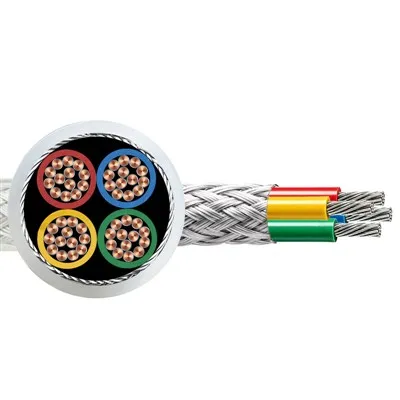
First, let’s start with what a cable harness even is, for anyone who might be new to the space: it’s a group of wires, cables, connectors, and sometimes sleeves or shielding that’s pre-assembled to carry power, data, or signals between components. Think of it like the nervous system of a device—mess it up, and the whole thing crashes. In medical settings, that’s not just an inconvenience; it can be a safety issue. So why does this work for medical gear, specifically?
Let’s run through common medical devices to make this tangible. Take portable patient monitors—those are the ones that track heart rate, blood oxygen, blood pressure all at once. Back in the day, technicians would have to thread a bunch of loose wires through the monitor’s casing, making it bulky and easy to yank free. Now, a custom harness neatly bundles those power and signal cables, so there’s less clutter, fewer points of failure, and the device is way easier to sanitize. Then there’s surgical robots, like the ones used in minimally invasive procedures. Those have tiny, super-sensitive joints that need precise signal transfer to move. Harnesses here are built with ultra-fine gauge wires and specialized shielding to stop external interference—no crossed signals, no missteps during an operation. Even things like MRI machines, which are in one of the most extreme medical environments you can get—strong magnetic fields, high heat, constant vibration—rely on harnesses made with radiation-resistant materials and connectors that won’t pull apart when you need to scan a patient fast.
Wait, but medical has specific rules, right? I can’t just use the same harness I make for industrial machinery. That’s the part that separates the good suppliers from the guys who cut corners. Let’s talk about the key requirements that medical harnesses have to meet. First, biocompatibility. If a harness is going to touch a patient’s skin, or be part of an implantable device, the materials can’t leach anything harmful. No cheap plastic coatings that break down over time, no metal connectors that rust. We work with materials like medical-grade PVC, silicone, and PEEK polymers that are tested not to cause irritation or toxicity. Then there’s sterilizability. A lot of medical devices get autoclaved—steam sterilized at super high temps—or wiped down with harsh chemicals. The harness has to hold up. We test every batch to make sure the insulation doesn’t crack or the connectors don’t corrode after repeated sterilization cycles; that’s non-negotiable.
Another big one: data integrity. A lot of modern medical devices, like continuous glucose monitors or insulin pumps, send sensitive patient data to cloud servers or a doctor’s app. If the harness can’t keep the signal clear, you might get a wrong blood sugar reading, leading to a bad insulin dose. That’s why medical harnesses often have shielded cables—usually foil or braided shielding—to block electromagnetic interference (EMI) from things like other devices in a hospital room, power lines, even mobile phones. We recently did a harness for a portable insulin pump that had extra shielding specifically because the client kept getting signal drops when the pump was near a hospital WiFi router; we adjusted the harness’s shielding during prototyping, and they haven’t had an issue since.
Now, let’s address the elephant in the room: why not just use loose wires? I’ve heard that from clients before. Loose wires might be cheaper upfront, but when you factor in assembly time, reliability, and compliance, harnesses win every time. For OEMs (original equipment manufacturers), pre-assembled harnesses cut down on man-hours on the factory floor. Instead of technicians threading individual wires for hours, they just plug the pre-built harness into the device’s internal ports. That reduces human error—no crossed wires, no forgotten connections. Also, harnesses are way more consistent. Every single one we make is tested for continuity and signal transfer, so you don’t have a device that works one day and fails the next because a wire was twisted during assembly. For medical devices, consistency is life.
But wait, are there limits? Can you use a harness for every medical device? Let’s be real—no. Super small, disposable medical devices, like a single-use heart monitor patch, might use a tiny flex cable instead of a traditional harness, because a harness would be too bulky and expensive to produce for a one-time use. But for durable, reusable medical gear, harnesses are the go-to. Even implantable devices, like pacemakers, use tiny, custom harnesses to connect the battery to the leads that go to the heart—they’re just miniaturized and built to last inside the body for years.
Let me share a quick story to make this relatable. A few years back, we worked with a startup that was making a new at-home kidney dialysis machine. They were using loose wires initially, and their prototypes kept failing—either the wires would fray after a few uses, or signal would drop when the machine was on. We sat down with their engineering team, walked them through the compliance requirements, and designed a custom harness with reinforced insulation, moisture-resistant connectors, and a shielding layer to block interference from the machine’s power supply. The result? Their first production units had a 99.8% reliability rate, way higher than their prototype. They’ve been with us ever since, expanding their harness specs as they roll out newer models. That’s the kind of collaboration we’re all about—understanding the unique needs of a medical device, not just selling a standard harness.
Now, let’s talk about what suppliers like me bring to the table, beyond just making parts. Medical device engineers don’t just need a vendor—they need a partner who knows the space. We work with them during the design phase, not after the device is already in production. That means we can suggest material changes or shielding adjustments early on, before it’s too late to tweak the design. For example, if a device is going to be used in an MRI suite, we’ll recommend a non-magnetic connector, because a steel connector would move in the magnetic field and could hurt a patient. That’s the kind of insight you don’t get from a standard electronics supplier.
Also, traceability is huge in medical. If a device fails, you need to be able to track every part that went into it, right down to the batch of wire. We keep full records of every harness we make—materials used, test results, lot numbers—so if there’s an issue, we can pinpoint exactly where it happened. That’s a requirement for FDA compliance (in the US) and similar regulatory bodies around the world, so it’s not something we cut corners on.
Wait, but let’s not ignore the challenges. The demand for medical devices is exploding—we’re seeing new devices for at-home care, telemedicine, and remote monitoring every month. That means suppliers have to be able to scale quickly, but without sacrificing quality. We invested in automated assembly lines last year, but we still keep a small team of technicians to hand-build custom harnesses for small-batch devices, because startups and smaller medical companies often don’t need huge production runs, but they still need the same level of precision. It’s a balance, and that’s what keeps us in the game.
So, to circle back to the original question: yes, cable harness assemblies are not just usable in medical devices—they’re essential for modern, reliable, and safe medical tech. From portable monitors to surgical robots to implantable devices, harnesses provide the structure, signal integrity, and durability that medical gear can’t do without. But it’s not just any harness—you need a supplier that understands the unique regulatory, safety, and performance needs of the medical space.

If you’re an OEM, startup, or engineer working on a medical device and you’re wondering if a custom harness is right for you, we can walk through your specs, talk about compliance, and even make a prototype for testing. Don’t hesitate to reach out to our team to discuss your project and find the right harness solution for your medical device needs.
RF Coaxial Cable References:
- FDA. (2023). Quality System Regulation (QSR) for Medical Devices. U.S. Food and Drug Administration.
- International Organization for Standardization. (2020). ISO 13485: Medical Devices – Quality Management Systems. ISO.
- National Institute for Occupational Safety and Health. (2022). Medical Device Wiring and Component Reliability. Centers for Disease Control and Prevention.
- Medical Design & Manufacturing. (2021). "Cable Harnesses: Critical Components for Medical Device Reliability." Endeavor Business Media.
- International Electrotechnical Commission. (2023). IEC 60601-1: Medical Electrical Equipment – General Requirements for Basic Safety and Essential Performance. IEC.
Yangzhou Huayu Cable Co., Ltd.
Yangzhou Huayu Cable Co., Ltd. is one of the most professional cable harness assemblies manufacturers and suppliers in China, also supports customized service with low price. Please feel free to wholesale advanced cable harness assemblies made in China here from our factory. Contact us for pricelist.
Address: No.9 Jingang Road, Yangzhou City, Jiangsu Province, China
E-mail: info@huayucabletech.com
WebSite: https://www.huayucabletech.com/
