If you’ve ever stood in front of a packaging line or a workshop floor monitoring compressed air systems, you’ve probably asked yourself this question: Can a refrigerated air dryer work with oiled air? Let me cut to the chase—this is the question I get most from new customers, and the answer isn’t a straight “yes” or “no.” It’s a little nuanced, and as someone who’s been selling and supporting refrigerated air dryers (RADs) for over a decade, I’ve seen what happens when someone skips the small print and tries to run oil-laden air through a dryer that wasn’t designed for it. Let’s break this down like we would over a coffee on the shop floor, no stuffy engineering jargon that makes your eyes glaze over. Refrigerated Air Dryer
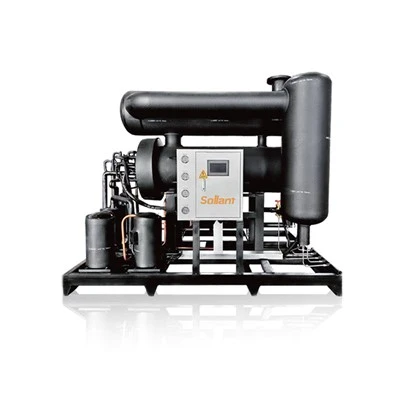
First, let’s get the basics straight. A refrigerated air dryer’s whole job is to remove moisture from compressed air. It does this by cooling the air to a set temperature—usually around 35 to 40 degrees Fahrenheit (2 to 4 degrees Celsius)—which causes water vapor to condense into liquid that we then drain out. That works great if the air going in is mostly moisture and a tiny bit of oil, like from a properly maintained rotary screw compressor with an oil separator that catches 99% of the lubricant. But if that air is thick with oil, we’re talking about a different scenario. Oil in compressed air systems comes from two main places: the lubricant used in compressors (for oil-injected models, which are super common for most industrial and commercial setups) and sometimes oil that seeps in from faulty pipework, old hoses, or poorly maintained tools. When I say “oiled air,” I mean air with oil concentrations above 0.5 parts per million (ppm)—that’s the threshold where things start going sideways for a standard refrigerated air dryer.
Let’s talk about what happens when oil mixes with the RAD’s core components. The heart of a refrigerated air dryer is the heat exchanger, right? That’s where the hot compressed air from the compressor hits the cold coils, cooling down to condense moisture. If there’s oil in that air, it sticks to the surface of those coils. Oil doesn’t conduct heat nearly as well as metal, so it creates an insulating layer. Over time, that layer gets thicker—like grease on a frying pan that makes it take longer to heat up. Once the coils are coated in oil, the dryer can’t cool the air down to the right temperature anymore. That means less moisture condenses out, so your compressed air system ends up with more water, which can damage pneumatic tools, rust pipes, and ruin products—think of food and beverage packaging, electronics assembly, or automotive paint booths. I had a customer last year, a small auto body shop, who tried to save money by skipping their upstream oil filter and running oil-laden air through their existing refrigerated dryer. Within six months, their dryer’s coils were so caked with gunky oil that the dryer could only cool air to 50 degrees Fahrenheit, not 35. They ended up replacing the coils and had to add a coalescing filter anyway—costing them twice what a proper setup would have.
Another problem: the drainage system. All refrigerated air dryers have automatic drains that remove the condensed water (and whatever else is in there) from the bottom of the unit. Oil mixed with water forms an emulsion—think of vinaigrette that won’t separate—instead of two distinct liquids. That emulsion is thicker than plain water, and it’s sticky, so it can clog the tiny valves and ports on the automatic drain. When that happens, water (and oil) backs up into your compressed air lines. I’ve seen systems where clogged drain valves caused so much water buildup that it shut down the entire production line during a paint job, leaving the customer with $12,000 in lost materials and downtime. That’s the kind of avoidable headache that makes me tell every customer: oil and standard refrigerated air dryers don’t mix well, not unless you have the right safeguards.
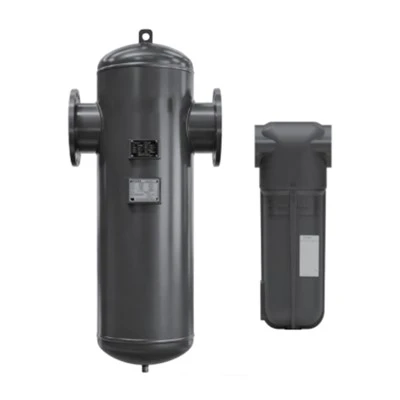
Wait, but hold on—there is a caveat here. Not all refrigerated air dryers are the same. Some of us sell “oiled-air tolerant” RADs, or what the industry often calls “refrigerated dryers with oil pre-separation capabilities.” These models have extra features: a coalescing filter integrated upstream of the heat exchanger, or a special pre-cooler that separates most of the oil before it reaches the core coils. Let me explain how that works. The integrated coalescing filter is made of fine fiber mesh that catches oil droplets as small as 0.01 ppm. Those droplets combine into larger ones that fall out of the air stream before it hits the heat exchanger. The pre-cooler, meanwhile, cools the air just enough to condense most of the oil before the main cooling step, so the oil gets drained out separately. These dryers are designed to handle oil concentrations up to 10 ppm, which covers most properly maintained oil-injected compressor systems, as long as you add a good primary oil filter upstream of the dryer.
But even with these modified models, there’s a limit. If your air has more than 10 ppm of oil—like if your compressor is failing, or you’re using a reciprocating compressor that dumps more oil into the air stream, or you have a leaky pipe that’s pulling in oil from somewhere else—even the tolerant RADs will struggle. The filter will clog faster, the coils will still get coated, and you’ll start having issues. The key here is proper upstream filtration, and that’s something I always emphasize to customers. You can’t just put a standard or even a tolerant refrigerated air dryer on a system with bad oil management and expect it to work perfectly long-term.
Let’s talk about long-term maintenance, because that’s where a lot of customers go wrong. A few years back, I worked with a woodworking plant that had a refrigerated dryer with oil tolerance, but they skipped routine filter changes. After 18 months, their coalescing filter was so full of oil that it wasn’t catching anything anymore. The oil went straight to the coils, and within a year, they had to replace the entire heat exchanger— a $4,000 part. If they had changed the filter every six months, as the manufacturer recommends, they would have avoided that cost. That’s not a failure of the dryer or the oil tolerance feature; that’s a failure of regular maintenance. So even when a refrigerated air dryer can handle oil, you can’t set it and forget it. You have to check the filters, clean the coils (yes, even the ones on tolerant models), and make sure the drains are working properly every few months.
Now, let’s compare this to other types of dryers, just to put it in perspective. For really high oil concentrations, like above 10 ppm, a desiccant dryer is sometimes recommended, but desiccant dryers are more expensive to buy and operate—they need to be regenerated, which uses a lot of compressed air and energy. A properly sized refrigerated dryer, with the right oil filtration upstream, is almost always more cost-effective for systems with oil concentrations up to 10 ppm, which is the sweet spot for most industrial and commercial applications. I tell customers to do a quick test: take a sample of your compressed air, run it through an oil test kit (they’re cheap, around $50), and see what your oil concentration is. If it’s below 10 ppm, a refrigerated air dryer—with a small oil pre-filter—will work perfectly. If it’s higher than that, you might need to upgrade your compressor or add an additional coalescing filter before the dryer, or look into a different type of dryer, but that’s rare for most setups.
Another common myth I hear: “If I add a filter after the dryer, it will catch the oil.” That’s true for some oil, but not all. The filter after the dryer has to be able to handle oil mixed with water, and it will still add maintenance and cost. Plus, if the oil gets past the dryer’s coils, it can still clog the downstream filter and cause issues. It’s far better to catch the oil before it reaches the dryer, not after. That’s why I always recommend pairing a refrigerated air dryer with a primary coalescing filter rated for your compressor’s oil output.
Let me wrap this up with a real example that still sticks with me. Last year, a customer from a food processing plant reached out in a panic. Their production line was shutting down because the compressed air had water and oil in it, ruining batches of their frozen berries. They had an old refrigerated dryer that they thought was broken, but when we came to look at it, the coils were covered in a thick, oily sludge, and the upstream oil filter had never been changed in three years. We cleaned the coils, replaced the filter, added a new automatic drain, and adjusted the dryer’s settings. That dryer worked perfectly for them, and they didn’t have to buy a new one. They just had to do the maintenance they’d been skipping. That’s the thing about refrigerated air dryers and oiled air: it’s not that they can’t work together—it’s that they need the right setup to do it.
If you’re wondering whether your current refrigerated air dryer can work with your oiled compressed air, or if you’re looking to set up a new system and want to make sure you get it right, don’t guess. Every system is different, and I’ve helped dozens of customers avoid costly mistakes by doing a quick audit of their current setup. Whether you have questions about oil concentrations, dryer sizing, filtration needs, or just want to make sure your existing system is running as efficiently as possible, I’m here to help. When you’re dealing with compressed air, small choices—like adding the right filter, changing it on schedule, or picking a dryer with the right oil tolerance—save you thousands in downtime and repairs down the line.
If you’re ready to talk through your specific needs, or need help assessing your current system, reach out. We can walk through your setup, answer any questions you have about refrigerated air dryers and oiled air, and make sure you get the solution that works best for your operations. Don’t let avoidable issues with moisture and oil shut down your line—let’s get it right the first time.
Desiccant Air Dryer References
Compressed Air and Gas Institute. (2018). Refrigerated Air Dryers: Operating Principles and Application Guidelines. CAGI Publication RADD-1.
Parker Hannifin Corporation. (2020). Oil Coalescing Filtration for Compressed Air Systems: Performance and Maintenance Best Practices. Parker Fluid Technology Guide.
Ingersoll Rand. (2019). Compressed Air Contaminants: Oil, Water, and Particulates – Impacts on System Performance. Industrial Air Compressor Engineering Bulletin.
Shanghai Sollant Energy Saving Technology Co., Ltd.
As one of the most professional refrigerated air dryer manufacturers and suppliers in China, we’re featured by quality products and good service. We warmly welcome you to buy bulk advanced refrigerated air dryer from our factory. If you have any enquiry about cooperation, please feel free to email us.
Address: No.215, Songri Center, Beihongqiao, Jiading District, Shanghai, China
E-mail: info4@sollant.com
WebSite: https://www.sollanttreatment.com/
