Hey everyone, and welcome back to my shop blog. I’m Jake, and for the last 12 years, I’ve been the go-to guy for all things brake wheel cylinders—running a small but tight operation supplying these parts to repair shops and fleets across the Midwest. Today, I’m answering a question I get at least once a week: Do all vehicles have brake wheel cylinders? Spoiler alert: The short answer isn’t as straightforward as you might think. Let’s dive into it, and I’ll break it down like I would with a regular customer who walks through my shop door. Brake Wheel Cylinder

First, let’s get super clear on what a brake wheel cylinder is, just in case someone’s new here. If you’ve ever had drum brakes work, you’ve seen one. Those are the round, metal units mounted inside each rear drum brake (mostly, though some older front systems had ’em) that push the brake shoes outward when you hit the pedal. It uses hydraulic pressure from the master cylinder to do its thing—no wheel cylinder, no pressure to move the shoes, and your drum brakes turn into a big, heavy paperweight. That’s why wheel cylinders are non-negotiable for drum brake setups. But here’s the catch: not every vehicle uses drum brakes.
Let’s start with the basics: passenger cars. For the last 25 years or so, most new cars coming off assembly lines have switched to disc brakes on all four wheels, right? Wait—even most compact cars? Yeah, I see that a lot. A 2015 Honda Civic I worked on last month? All discs, no drum brakes. No drum brakes means no wheel cylinders. But hold on—what about older cars? A 1985 Ford F-150, that’s definitely got rear drum brakes. Wheel cylinder there, no question. What about trucks? Heavy-duty pickups like a 2022 Ram 3500? Wait, some trims have disc brakes all around, others have drum rear. I had a customer last month with a 2021 Chevy Silverado 2500HD that had rear drums—he needed two new wheel cylinders stat, we had ’em in stock, got ’em out same day.
But let’s not stop at cars and trucks. What about motorcycles? I get a lot of questions from moto mechanics. Most street bikes use disc brakes front and rear—no wheel cylinders. Wait, but some older cruisers? Like a 1990 Harley-Davidson Softail? Some models had rear drum brakes, so yeah, they have a wheel cylinder there. Dirt bikes? Almost all modern ones have disc brakes, so no wheel cylinders. That’s a big one for moto folks, because they often mix-and-match parts between vehicles they work on.
Now, what about commercial vehicles? Fleets of delivery vans, school buses, cargo trucks. Wait, school buses—those are almost all rear drum brakes, right? I supply a big local school district, and every single one of their buses has wheel cylinders on both rear drums. Even their front wheels? Wait, no—fronts are usually disc. But rears are drums, so wheel cylinders. What about semi-trucks? Big rigs. Most semi-trucks have air brakes, not hydraulic. Hold on—here’s a key point. Air brake systems for heavy trucks use a different kind of component, but wait—do they have something equivalent to a wheel cylinder? Let me explain. In hydraulic systems, it’s a wheel cylinder; in air brake drum setups, it’s an air chamber, sometimes called a brake chamber. But is that the same as a wheel cylinder? No, not exactly. It’s a pneumatic actuator, not a hydraulic one. So a semi-truck with air drum brakes doesn’t have a hydraulic wheel cylinder—they have air chambers. That’s a huge distinction I have to make with my customers, because if they mix up the two, they’re gonna buy the wrong part.
What about EVs? Electric vehicles are a hot topic now, and a lot of my regulars are asking about them. Most new EVs—Tesla, Nissan Leaf, Ford Mustang Mach-E—use disc brakes all around, right? Wait, but some entry-level EVs? Or models that prioritize battery range? Oh, right—some have rear drum brakes to save weight. Wait, let me confirm that. A 2023 Chevy Bolt—yes, it has rear drum brakes, so it does have wheel cylinders. A Tesla Model 3 Performance? All disc brakes, no wheel cylinders. That’s a cool example because even EVs, which are new tech, still have wheel cylinders if they use rear drums. I actually did a webinar last year with a local EV repair shop and that was a big question—EVs don’t have wheel cylinders, but some do.
Now, the exception that proves the rule: anti-lock braking systems (ABS). Wait, do ABS affect wheel cylinders? No, not really. The ABS module just modulates hydraulic pressure to the brakes. If you have drum brakes with ABS, you still have wheel cylinders—they just get tiny, quick bursts of pressure from the ABS pump. I’ve replaced wheel cylinders on ABS-equipped trucks, and they work exactly the same way as non-ABS ones. So ABS doesn’t eliminate the need for wheel cylinders.
Let’s talk about when vehicles do NOT have wheel cylinders. If a vehicle has all disc brakes, no drum brakes. Disc brakes use calipers, not wheel cylinders. Calipers have pistons, but they’re part of a different system—they clamp the brake pads onto the rotor instead of pushing shoes outward inside a drum. So that’s the main scenario. But wait, are there any other cases? What about recreational vehicles? RVs. Some old RVs have drum brakes, some new ones have disc. I had a customer with a 2019 Winnebago that had rear drum brakes—wheel cylinders there. A 2023 Airstream with disc brakes? No wheel cylinders. That’s another common one, since RVs are a big market for my parts.
Now, let’s clear up a common misconception. A lot of people think that all rear brakes are drums, but that’s not true anymore. Manufacturers switch to rear disc brakes to improve stopping performance, save a little fuel (less weight), and reduce maintenance. But drum brakes are still cheaper to make for lower-end vehicles, and they hold up well for heavy loads, so you’ll still see them on rear wheels of trucks, vans, and some sedans. So wheel cylinders are only present where there are drum brakes—usually rear, sometimes on older front brakes.
Wait, let’s test this with some examples. Let’s say a 2008 Toyota Corolla—rear drum brakes, has wheel cylinders. A 2024 Toyota Corolla Hybrid—wait, I think that has rear disc brakes now, right? Let me check—yes, the 12th-gen Corolla has rear discs, so no wheel cylinders there. That’s a big shift in the last few years. What about a 1970 Chevy Camaro? Rear drum brakes, wheel cylinders. A 2024 Camaro? Wait, the current Camaro (as of 2024) is still available with rear drum brakes on some base models, but most trims have rear discs. So even the same model, different years, can have different setups—meaning some have wheel cylinders, some don’t. That’s why it’s so important to know your vehicle’s brake system, not just rely on the make and model.
Now, why does this matter to me, as a brake wheel cylinder supplier? Because I can’t just carry one part for every vehicle. I have to stock different sizes, different materials (cast iron vs. aluminum, depending on the application), and match them to the brake system. If someone comes in needing a wheel cylinder, the first thing I ask is: What kind of brakes do you have—drum or disc? Where are they located? Is it front, rear? What year, make, model? Because if they tell me they have a 2022 Tesla Model Y, I’m gonna tell them we don’t have a wheel cylinder for that—all discs. If they tell me a 2018 Ford Transit van, I know that has rear drum brakes, so we have the right wheel cylinders in stock.
I get so many mix-ups from customers who say “my truck needs a brake cylinder” and don’t specify wheel vs. caliper. I have to make that distinction every time. A caliper is for disc brakes, a wheel cylinder is for drum. If you mix those up, you’re wasting time and money buying the wrong part. That’s why I always explain that to anyone who’s not sure.
Another thing: wheel cylinder maintenance. A lot of people don’t think about wheel cylinders until they leak. They’re inside the drum, so you can’t see them easily, but they can wear out from hydraulic pressure, rust, or old brake fluid. I replace a lot of wheel cylinders from older vehicles where the rubber seals inside dried out and leaked—so the brake pedal goes soft, or the rear brakes don’t work. That’s a common repair, especially for vehicles over 10 years old.
Now, going back to the original question: Do all vehicles have brake wheel cylinders? The simple, accurate answer is no. Only vehicles that have at least one drum brake (almost always the rear wheels) will have a brake wheel cylinder. If a vehicle has all disc brakes, it won’t have one. That’s the key takeaway.
Wait, but let’s make sure we didn’t miss any edge cases. What about go-karts? Oh, right—go-karts! Some have drum brakes, some have disc. A drum brake go-kart? Yep, wheel cylinder. A disc brake go-kart? No. That’s a niche market, but we supply wheel cylinders for go-kart repair shops too. What about farm equipment? Tractors, combines. Almost all farm equipment uses drum brakes, so they have wheel cylinders. I sell a ton of wheel cylinders to local farmers for their tractors—they go through ’em pretty hard out in the fields, dust and mud get to ’em, so they need replacements every few years. That’s a big part of my business I don’t talk about enough, but it’s super important.
Now, let’s wrap this up. The big takeaway: Brake wheel cylinders are only for vehicles with drum brakes. All disc brake vehicles (most new cars, many trucks, EVs, motorcycles) don’t have them. Some older vehicles, heavy-duty trucks, and EVs with rear drums do have them. If you’re not sure whether your vehicle has a wheel cylinder, the easiest way is to pop off the rear brake drum (be careful, there’s still brake pressure!) and check—if you see two round cylinders pushing the shoes, that’s your wheel cylinder. If you see a caliper bolted to the rotor, no wheel cylinder.
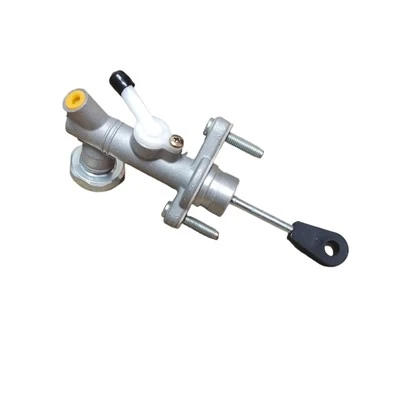
Whether you’re a repair shop owner, a fleet manager, a DIY mechanic, or just someone who wants to know more about their brakes, I’m here to help. If you need wheel cylinders for any vehicle—cars, trucks, buses, farm equipment, go-karts—we’ve got you covered. We stock all the standard sizes, and if you need a custom or hard-to-find part, we can get that too. Don’t waste time with the wrong parts or confusing brake components—reach out, tell us what you need, and we’ll make sure you get the right wheel cylinder to get the job done right.
Clutch Slave Cylinder Reference: Automotive Brake Systems, 8th Edition, Delmar Cengage Learning, 2021.
Ruian Xinyao Automobile Parts Co., Ltd.
With abundant experience, we are one of the most professional brake wheel cylinder manufacturers and suppliers in China. We warmly welcome you to wholesale bulk advanced brake wheel cylinder from our factory. If you have any enquiry about cooperation, please feel free to email us.
Address: Xialin Industrial Zone, Tangxia Town, Ruian City,Wenzhou City,Zhejiang Province,China
E-mail: 18969725686@163.com
WebSite: https://www.raxinyao.com/
