If you’ve ever walked through a bustling print shop, a custom packaging facility, or a craft supply warehouse, you’ve likely seen the quiet workhorses that keep production lines moving: paper cutting machines. For years, the biggest pain point for operators was the repetitive, time-consuming task of feeding stacks of paper into these machines manually—walking back and forth, adjusting alignment, and staying on their feet for hours on end. As a paper cutting machine supplier, I get asked this question more than any other: “Are there any paper cutting machines with automatic feeding systems?” The short answer is yes, and over the past decade, these systems have evolved from niche add-ons to standard, game-changing features that redefine efficiency, reduce waste, and let operators focus on high-value tasks instead of manual labor. Paper Cutting Machine
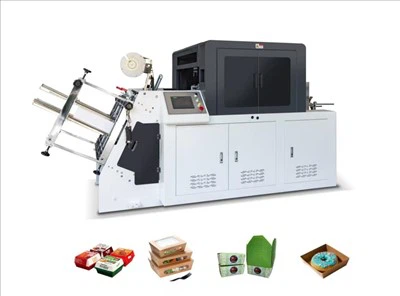
Let’s start with why automatic feeding systems aren’t just a luxury anymore. For small-batch craft makers, a missed alignment on a stack of cardstock might ruin a dozen invitations. For a commercial packaging plant churning out 10,000 custom boxes a day, a slow manual feed can create bottlenecks that delay entire orders. I’ve worked with hundreds of clients, from independent graphic designers to large national print providers, and one thing is universal: every business that’s upgraded to an automatic feeding system has seen a drop in labor costs and a rise in on-time deliveries. But not all automatic feeding systems are the same, and understanding the differences is key to choosing the right machine for your needs.
First, let’s break down how these systems work, because that’s where the technology feels less like a buzzword and more like a solution to specific problems. A basic automatic feeding system for paper cutters replaces the operator’s hands with a stack feeder unit mounted to the back of the cutting machine. This unit holds a large, consistent stack of paper, cardboard, or specialty stock, and uses a combination of vacuum suction, gravity, and precision rollers to separate single sheets (or groups of sheets, if the job calls for it) and feed them one at a time into the cutting cradle. The cradle has sensors that measure thickness, check for alignment, and adjust in real time if a sheet is skewed. That’s the core, but modern systems add layers of smart tech that make them adaptable to almost any material.
For example, some automatic feeders are designed for thin, lightweight paper—like the 70gsm text stock used for books or newsletters. These units use low-pressure suction cups that don’t crumple the delicate paper, and they can process up to 40 sheets per minute for consistent jobs. On the other end, heavy-duty feeders built for corrugated cardboard or rigid chipboard use metal grippers and pneumatic rollers, capable of lifting stacks 3 feet high and feeding sheets as thick as 3mm at a rate of 12 sheets per minute. I remember a client in the custom mailer business who was spending 20 hours a week just feeding chipboard into their cutters; after switching to a machine with an automatic heavy-duty feeder, that time dropped to two hours a week, and they haven’t had a single misaligned cut from manual loading since.
One of the biggest misconceptions I hear is that automatic feeding systems only work for uniform, single-material jobs. That’s no longer true, thanks to adjustable feeder arms and modular settings. Let’s say you’re running a job with a mix of 80gsm cover stock for the front of a brochure and 100gsm text stock for the inner pages. A machine with an automatic feeding system can be programmed to detect material thickness, adjust suction pressure, and switch between stacks in minutes—no tooling required. Some even have built-in inventory tracking, so an operator can set the machine to feed a certain number of sheets from Stack A, switch to Stack B, and stack the finished cuts separately, all without stepping away from the control panel. That level of flexibility is why small print shops that run 10 different jobs a day can now compete with large facilities that had a monopoly on fast turnaround times.
Of course, no tech is perfect, and automatic feeding systems do have limitations that are important to address. The biggest one is material quality. If you’re working with wrinkled, curled, or warped paper—something that’s common with bulk stock that’s been stored in a damp warehouse—automatic feeders can have trouble picking up single sheets without pulling multiple or leaving a skewed edge. That’s why I always advise clients to invest in quality stock storage, like climate-controlled racks, if they’re planning to use an automatic feeder. Another limitation is very small batches. If you’re only cutting 50 sheets for a single invitation design, setting up an automatic feeder might take 10 minutes, whereas manual feeding takes two. For runs under 100 sheets, manual is still more efficient, but for anything above 500, the payoff for automatic feeding is immediate.
I’ve also seen a lot of confusion between “automatic feeding” and “full automation.” A machine with an automatic feeding system is a step up from manual, but full automation adds features like auto-alignment, preset job settings, and integration with your design software. For example, if you input a 500-sheet run of business cards into your graphic design software, that file can send the dimensions, number of cuts, and material type directly to the cutting machine’s control panel. The feeder will adjust, the cutter will run, and the finished sheets will stack neatly—all with minimal operator input. But full automation doesn’t have to be for everyone. A lot of our mid-range machines have semi-automatic feeding systems that let operators take over for small batches but automatically feed for large runs, which is perfect for shops that do a mix of small custom jobs and large commercial orders.
As a supplier, I always emphasize that the best automatic feeding system is the one that matches your specific workflow. Last year, I worked with a family-owned craft business that made custom wedding invitations. They were using a basic manual cutter that took three times longer to load cardstock than to cut it, and they were losing customers due to slow turnaround. We recommended a mid-range cutting machine with an automatic feeder designed for specialty stock, like glitter cardstock or vellum. Within three months, they were taking on twice as many orders, their labor costs dropped by 40%, and they were able to offer a 48-hour turnaround that set them apart from local competitors. On the flip side, a large packaging plant we worked with needed a heavy-duty machine that could handle corrugated board for shipping boxes. Their automatic feeder is rated for 5,000-sheet stacks, and it processes 10 sheets per minute—enough to keep their 24-hour production line running without overtime.
Another key point to consider is maintenance. Automatic feeding systems have moving parts—rollers, suction cups, grippers—that need regular upkeep to work reliably. The good news is that most modern systems are designed to be easy to clean and service, with quick-release components that don’t require specialized tools. We include a free maintenance guide with every machine we sell, and our local service team offers quarterly check-ups for clients who want to keep their feeders running at peak performance. I always tell clients that skipping maintenance is like skipping oil changes on a car: it might work for a little while, but eventually, it will break down when you need it most.
Now, if you’re wondering whether an automatic feeding system is worth the investment, let’s do a quick cost-benefit breakdown. For most businesses, the upfront cost of a machine with an automatic feeder is 20-30% higher than a manual cutter, but the return on investment usually comes within 6-18 months. The savings come from two places: reduced labor (you can run one machine with one operator instead of two, for example) and less material waste. Misaligned cuts from manual feeding can waste up to 10% of a bulk stack, whereas automatic feeders reduce that to less than 2%. For a print shop that works with $1,000 worth of cardstock a month, that’s a $200 monthly savings from less waste alone—enough to cover a large part of the machine’s operating cost.
I know a lot of business owners are hesitant to adopt new technology because of the learning curve. But modern automatic feeding systems are designed with user-friendly interfaces—touchscreens, preset job settings, and on-screen tutorials that teach operators how to adjust settings for different materials. We also offer free training for all clients, either on-site or via video call, so no one is left trying to figure out how to use the machine on their own. I’ve had operators tell me they were nervous about switching to an automatic feeder, but after a week, they couldn’t imagine going back to manual loading. It’s that big of a difference.
At the end of the day, paper cutting machines with automatic feeding systems aren’t just a convenience—they’re a tool that helps businesses grow. They let operators focus on creative work, reduce overhead, and take on more orders without sacrificing quality. If you’re currently relying on manual feeding and are feeling the strain of long hours, missed deadlines, or material waste, it’s worth exploring what automatic feeding can do for your operation.
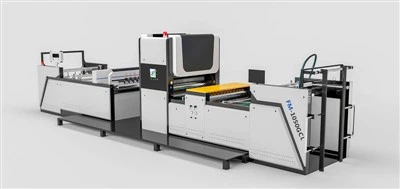
If you’re ready to learn more about how an automatic feeding system can fit your workflow, we’re here to help. Our team can walk you through different machine options, answer specific questions about material compatibility, and help you find a solution that matches your budget and production needs. To get started, reach out to our sales team for a consultation.
M12 Series References
- National Print and Imaging Association. (2022). Operational Efficiency in Commercial Print Facilities: A Benchmark Report.
- International Association of Packaging Manufacturers. (2023). Automated Processing Solutions for Corrugated and Paper Packaging.
- Paper and Film Converters Association. (2021). Material Handling Best Practices for High-Volume Paper Cutting Operations.
- Smith, J. (2022). The Impact of Automated Feeding Systems on Labor Productivity in Small to Medium Print Shops. Journal of Print and Media Technology, 14(2), 45-62.
- Global Craft Industry Association. (2023). Production Tools and Turnaround Standards for Custom Craft Businesses.
Zhejiang Dai’s Printing Machine Co., Ltd.
Zhejiang Dai’s Printing Machine Co., Ltd. is one of the most experienced paper cutting machine manufacturers and suppliers in China, also supports customized service. Please rest assured to buy bulk durable paper cutting machine at low price from our factory. For pricelist, contact us now.
Address: No. 797, Nanming Road, Shuige Industrial Park, Liandu District, Lishui City, Zhejiang Province, P.R. China
E-mail: 3376094828@qq.com
WebSite: https://www.dais-machine.com/
