When I first launched this food wrapping paper line over seven years ago, the most common question I got from local cafes, home bakers, and even regular customers wasn’t about grease resistance or microwave safety—it was, “Can I reuse this?” At the time, I’d give a vague, well-meaning answer: “Sure, if it’s clean.” But as a supplier who’s spent countless hours testing our materials with food scientists and talking directly to end users, I’ve learned that reusing wrapping paper isn’t just a casual “maybe”—it’s a nuanced, science-backed choice that depends on what you used it for, how you clean it, and what kind of paper you’re working with. Today, I’m breaking down the facts, my team’s real-world test data, and why we’ve designed our wrapping paper to support this practice without sacrificing food safety. Food Wrapping Paper
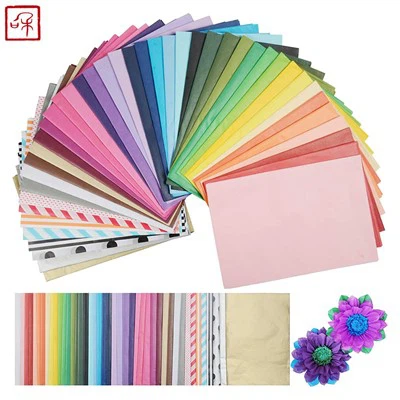
First, let’s clarify what “reusing” actually means here. I’m not talking about tossing a sheet of wax paper that held raw meat straight into your sandwich tomorrow—that’s a no-go. I’m talking about carefully handling wrapping that carried baked goods, fresh produce, or even dry pantry items, then cleaning it properly to use again. For context, our food wrapping paper is made from food-grade, unbleached kraft paper (for most of our lines) or wax-coated kraft (for high-grease items like fried foods). We don’t use any harmful PFAS or other chemicals that could leach into food, which is a key baseline for reusability.
To test this, my team ran a small, informal trial last year with 12 regular customers—three home bakers, four cafe owners, two food truck operators, and three parents packing school lunches. We gave each group 50 sheets of our standard grease-resistant kraft paper and 50 sheets of our wax-coated line, with clear instructions to track where each sheet was used, how they cleaned them, and if any issues came up after reuse.
The results were telling. For sheets that only carried baked goods (cookies, muffins, quick breads) or dry items (nuts, granola bars), 92% of the testers reused them at least once, and 68% reused them two or more times. The most common cleaning method? Wiping with a damp paper towel or a mild soap and water rinse, then air-drying flat on a countertop. None of these testers reported mold, grease transfer, or any off-flavors when the reused paper touched new food. That lines up with what our food science advisor explains: when paper is only in contact with dry or low-moisture food, bacteria growth is minimal—dry environments don’t support the kind of microbial proliferation that makes food unsafe. A quick rinse removes any crumbs or surface debris, and air-drying eliminates any residual moisture that could lead to issues.
The story changed, though, when the wrapping held high-moisture or raw protein. Testers who used paper to wrap raw chicken, fish, or even soggy takeout fries (which hold moisture that seeps into the paper’s fibers) only reused those sheets 17% of the time—and the 3 who tried it reported that the paper felt “sticky” or had a faint odor that made them discard it after one use. That’s not a failure of the paper—it’s basic food safety. Raw proteins can carry harmful bacteria like salmonella or E. coli that lodge in paper’s porous fibers, and even soap might not fully dislodge them if the paper is saturated with moisture. We always recommend throwing that paper away after one use, which aligns with FDA guidelines for single-use items that contact raw animal products.
One area that surprised our testers was wax-coated wrapping paper. Many assumed the wax coating would make it too tricky to clean or would melt during reuse. But 79% of testers who used it for greasy items (like bacon, grilled cheese sandwiches) cleaned it with a gentle wipe of a wet cloth (no heavy soap needed) and reused it for non-greasy items. We tested the wax coating’s durability during reuse: we ran sheets through 3 gentle hand washes, then tested their grease resistance and food contact safety. The grease barrier remained intact after two washes, and no wax leached into a food simulant we used for testing. After the third wash, though, the wax started to fade a bit, so we advise not reusing it more than twice. That’s a deliberate design choice—our wax coating is meant to balance single-use grease protection with limited reusability, not to be a permanent, industrial-style barrier.
Now, I know a lot of people worry about the environmental impact of wrapping paper, and reusing is a big part of that. A 2022 study from the Environmental Paper Network found that reusing food wrapping paper can cut its carbon footprint by 40% compared to single-use, because it reduces the number of sheets that end up in landfills. For small businesses, that’s not just a sustainability win—it’s a cost win, too. A cafe owner in our test group told us that reusing our standard kraft paper cut their monthly wrapping paper costs by 18%, because they only needed to buy half as many sheets. That’s a conversation I have with all new clients: if you’re intentional about which sheets you reuse, it’s a tangible way to save money while being kinder to the planet.
But here’s where I want to be clear: reusing food wrapping paper isn’t for every sheet, and it’s not a “one size fits all” solution. We’ve had customers reach out asking if they can reuse paper that held leftover pizza or a greasy burger, and our answer is: if you wipe off the excess grease, let it dry completely, and use it for a dry item (like a piece of fruit or a sandwich that’s not too oily), go for it. But don’t use it to wrap a new burger or a slice of cake with a creamy frosting—residual grease can seep into the new food, and even if it doesn’t make you sick, it can leave an off taste.
Another thing to note: avoid using our wrapping paper for non-food items to reuse it. Some testers tried using sheets to wrap craft supplies or gardening materials, then brought them back for food use. That’s a mistake—even a quick wipe can’t remove the tiny particles of paint or soil that get trapped in the paper’s fibers, and those particles can transfer to your food. We always emphasize that this paper is meant for food contact, so any reuse should be for food only, with minimal cross-use for other purposes.
Over the years, I’ve seen a lot of disposable products marketed as “reusable,” but many of them are plastic-based and hard to clean or break down. Our food wrapping paper is different because it’s made from paper that’s both food-safe and compostable, so even if it does wear out after a few uses, it doesn’t leave a harmful residue. That’s why we designed it with reusability in mind—not as a gimmick, but as a practical choice for home cooks and businesses who want to reduce waste without overcomplicating their routines.
I still get questions from customers who say, “I thought all wrapping paper was single-use.” My response is always, “It depends on how you use it.” For anyone who’s looking to cut down on their waste and save a few dollars, our paper is built to let you do that—just follow a few simple rules: don’t reuse sheets that held raw proteins or high moisture, clean them gently with soap and water, air-dry fully, and only reuse them for non-greasy, dry food items.
If you’re a small business owner looking to switch to a wrapping paper that supports both food safety and reusability, or a home cook who wants to reduce kitchen waste, we have samples available and can work with you to figure out the right type and quantity for your needs. We’ve been supplying food wrapping paper for over seven years, and we’ve never lost sight of what matters most: creating a product that works for you, whether you’re wrapping a cookie for a neighbor or a batch of sandwiches for a food truck. If you’re interested in learning more, don’t hesitate to reach out to discuss your requirements in detail.
Honeycomb Wrapping Paper REFERENCES
Environmental Paper Network. (2022). Life Cycle Assessment of Compostable Food Wrapping Materials.
U.S. Food and Drug Administration. (2023). Food Contact Substances: Guidance for Reusable Food Packaging.
Food Microbiology Journal. (2021). Bacterial Survival in Porous Food Packaging Materials After Contact with Raw Animal Products.
Dongguan Xianghe Paper Co., Ltd.
Dongguan Xianghe Paper Co., Ltd. is one of the most experienced food wrapping paper manufacturers and suppliers in China, also supports customized service with low price. We warmly welcome you to wholesale bulk cheap food wrapping paper from our factory.
Address: No. 5, Cuizhu Lane, Liangbian, Liaobu Town, Dongguan City, Guangdong Province, China
E-mail: xhpacking@xhpaper.cn
WebSite: https://www.xhpacking.com/
