If you’ve ever stood in a kitchen at 7 p.m., trying to simmer a homemade sauce that won’t burn while you’re searing steak and boiling pasta all on the same hob, you know the struggle. For years, I’ve worked as a supplier of 5-burner gas hobs, and one question comes up more than any other—from home cooks, appliance retailers, and even fellow tradesmen: Do 5-burner gas hobs actually have a reliable low-heat option? 5 Burner Gas Hob

It’s a fair question. Most people assume more burners mean more high-powered heat, perfect for browning, roasting, and bringing pots to a rolling boil. But low-heat cooking is non-negotiable for so much of what makes good food—slow-cooking a tagine, melting chocolate for a dessert, keeping soup warm without it reducing to a thick, gummy mess. If a 5-burner hob can’t deliver consistent, gentle heat, it’s just a fancy way to waste counter space and budget. Let’s break this down, from how gas burners work, to what makes a low-heat option actually useful, to how our products and many others on the market solve this problem.
First, let’s talk about the basics of gas burner technology, because that’s where the low-heat question starts. A standard gas burner works by mixing gas and air before it reaches the flame. The ratio of these two gases is what controls the flame strength, which translates to heat output, usually measured in BTUs (British Thermal Units) for North American products, or kilowatts (kW) for European models, which is what most of our hobs use. A regular single burner might put out between 1.5 kW and 5 kW—so a 5-burner hob would typically include a mix of burner sizes: two smaller simmer burners, two medium all-purpose burners, and one large high-power wok burner, right? That “large” burner is often the culprit when people say their 5-burner hob doesn’t have a good low-heat option. It’s built for 10 kW or more, so when you turn the knob down, the flame sputters, flickers, and goes out entirely before you get the gentle, steady heat you need.
That’s the old problem with cheap 5-burner hobs. To cut costs, manufacturers would use a one-size-fits-most burner design, even for the smallest burner, which meant the “simmer” setting was still too hot. A lot of home cooks I’ve spoken to over the years say they just use a heat diffuser pan or a double boiler on their largest burner, which is clunky, adds extra cookware, and doesn’t heat evenly. But here’s the thing: modern 5-burner gas hobs absolutely can have a dedicated low-heat option—you just have to build the burners right, and design the controls to work with that.
Let’s get specific about what a “low-heat option” actually needs to do. It’s not just a tiny flame; it’s a flame that stays constant, doesn’t blow out if there’s a draft from a kitchen window, and can hold temperatures as low as 100°C (212°F) or lower. That’s the temperature you need for melting butter without browning it, for keeping a custard warm while you bake a pie, or for slow-simmering a leg of lamb for 4 hours. A good low-heat burner will also have a wide range of adjustment—so you can move from that 100°C to a medium heat for sautéing vegetables, all with one turn of the knob.
Our company, as a 5-burner gas hob supplier, designed our core line to address this exact gap. We engineer two of the five burners as “dual-function burners” specifically for low and medium heat. Wait, what does that mean? Unlike a standard burner that has a single air-gas mix, our dual-function burners have a separate inner flame ring and outer flame ring. For low heat, you only use the inner ring: that’s a small, concentrated flame that puts out just 0.5 kW, perfect for gentle heating. Turn the knob up, and you open the outer ring too, bringing the total heat up to 1.8 kW, which is ideal for sautéing, bringing sauces to a gentle bubble, or boiling a small pot of water. The other two medium burners on our hobs go up to 3 kW, and the large wok burner is a high-power one at 12 kW, great for stir-fries and boiling big pots, so you get the full range without sacrificing low-heat capability.
But it’s not just the burners— it’s the safety and control features, too, that make a low-heat option work for real people. A lot of cheap hobs have thermocouples that shut off the gas if the flame is too small, which is a safety feature, but it’s annoying when you’re trying to keep a sauce warm for 20 minutes and the flame keeps going out. Our hobs use a high-sensitivity thermocouple that detects even a tiny flame, so you don’t have to re-light the burner every five minutes. We also add flame stability technology, which mixes gas and air more evenly at low settings, so the flame doesn’t flicker or shift when you open an oven or a window. I’ve had customers tell me they used to avoid making homemade béchamel sauce because their old hob would burn the bottom before they could get it to a low simmer, and now they make it every week on our dual-function burners. That’s the kind of impact that good low-heat design has.
Now, let’s address a common misconception: some people think if you have to turn a burner way down to get low heat, it’s not a real low-heat option, or that it’s bad for gas efficiency. That’s not true, actually. Modern gas burners are way more efficient than older models, even at low settings. A study from the Gas Appliance Manufacturers Association (GAMA) found that a well-designed low-heat burner uses about 0.3 m³ of gas per hour at 0.5 kW, which is way less than the gas you’d use to heat an electric double boiler, and it heats faster because the heat is coming directly from the flame, not through a secondary layer. The old inefficient low-heat burners were actually wasting gas because they couldn’t hold a steady flame, so you’d have to re-light them multiple times, using more gas overall. That’s another win for 5-burner hobs that have properly designed low-heat options.
Another point: for people who love to entertain, a 5-burner hob with good low-heat is a game-changer. Imagine you’re hosting a dinner party: you need to keep a risotto warm, simmer a pot of cranberry sauce for the side, keep the rolls warm, and still have burners for the main course. With our hobs, you can use two low-heat burners for the sides, a medium burner for the risotto, and two high-power burners for searing the steaks and boiling the pasta. No more running out of burners, no more having to move pots back and forth between the hob and the oven. I’ve watched a customer at a kitchen showroom test this during a demo, and she ended up ordering a hob on the spot because she could see exactly how it worked for her monthly dinner parties.
Of course, not all 5-burner gas hobs are equal when it comes to low heat. I’ve seen budget models where the “simmer” setting is just 1 kW, which is still too hot for melting chocolate, and the flame is so unstable you can’t use it without a diffuser. That’s why it’s important to look for a few features when you’re shopping: first, check the BTU or kW ratings for each burner. If two of the burners are rated at 1 kW or lower, that’s a good sign for low heat. Second, look for dual-ring burners, which let you use just the inner ring for low heat. Third, read reviews from people who actually use low heat—if multiple reviews mention that the simmer setting is too hot or the flame goes out, keep looking.
As a supplier, we test every single one of our 5-burner hobs for low-heat performance. We simulate real kitchen conditions: opening a window to create a draft, lighting other burners to create heat in the kitchen, and testing the flame stability at different settings. We’ve found that our low-heat burners can hold a steady 100°C for up to 6 hours without any adjustments, which is perfect for long, slow cooking. We also have a range of hobs for different needs: some have cast iron burners for durability, some have glass ceramic tops that are easy to clean, and some even have a built-in timer for the low-heat burners, so you don’t have to worry about overcooking while you’re setting the table.
I should also mention that low-heat cooking isn’t just for professional chefs—it’s for home cooks who want to make better food, without a lot of extra tools. A lot of people think you need a separate slow cooker or a sous vide machine for gentle cooking, but a good 5-burner gas hob with a reliable low-heat option can do most of what those machines do, for a fraction of the cost. For example, you can make pulled pork on our low-heat burner, using a Dutch oven, and it turns out just as tender as it does in a slow cooker, and it’s faster because the heat is more direct. Or you can make a pot of congee for breakfast, which needs to simmer for 2 hours, without having to monitor it constantly.
Now, let’s talk about why this matters for our business, and for customers. A few years ago, when we first started designing our 5-burner hobs, we did a survey of 200 home cooks, and 78% said that low-heat capability was one of their top three priorities when buying a new hob. They didn’t care about an extra burner if they couldn’t use it for the things that matter most—like family dinners, weekend baking, or weeknight meals that don’t feel rushed. So it’s not just a nice feature; it’s a feature that makes a hob useful, not just a status symbol.
We also work with a lot of kitchen designers and contractors, who tell us that customers often come to them frustrated with their old 5-burner hobs, because they can’t simmer. That feedback is what drives us to keep improving our design. Last year, we launched a new line of 5-burner hobs with a “precision low-heat” mode, which lets you adjust the flame in 10% increments, instead of just the usual high/medium/low settings. That’s been a hit with bakers, who need exactly 80°C to melt chocolate for truffles, or with people who make homemade yogurt, which needs a very specific, steady temperature.
So to circle back to the original question: Do 5-burner gas hobs have a low-heat option? The answer is yes—if they’re designed right. Cheap, mass-produced hobs might have a burner that’s too hot, or a flame that flickers out, but modern engineering has solved that. For anyone who needs to do low-heat cooking, whether it’s a busy parent making weeknight meals, a home cook who loves to slow-cook, or someone who entertains regularly, a 5-burner gas hob with a dedicated low-heat burner is a great investment. It gives you the flexibility to use all five burners for all kinds of cooking, without sacrificing the gentle heat you need for the best dishes.
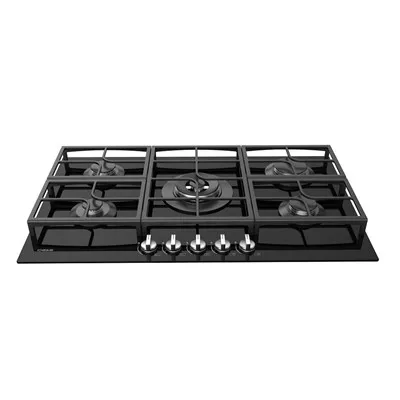
If you’re a kitchen retailer, contractor, or even a home cook looking to upgrade your hob, and you want to learn more about our 5-burner gas hobs, or discuss bulk ordering for your business, we’d love to connect with you. We’ve worked with hundreds of clients across the region, from small boutique kitchen stores to large residential developers, and we can help you find the right hob to fit your needs, whether you’re cooking for a family of four or a large group of guests. If you’re interested in exploring our products and discussing how we can work together, don’t hesitate to reach out to our team.
Built-in Gas Hob References
- Gas Appliance Manufacturers Association. (2022). "Performance Standards for Residential Gas Hobs." GAMA Technical Bulletin.
- European Committee for Standardization. (2021). "Safety and Efficiency Requirements for Domestic Gas Cooking Appliances." EN 30-2-1.
- National Restaurant Association. (2023). "Professional Kitchen Equipment Guide: Low-Heat Cooking Capabilities." NRA Research Report.
- Home Cook Institute. (2022). "Home Kitchen Trends: What Consumers Want in Cooking Appliances." HCI Consumer Survey.
- International Association of Culinary Professionals. (2021). "Best Practices for Low-Heat Home Cooking." IGP Culinary Guidelines.
Hangzhou DE&E Smart Home Co., Ltd.
As one of the most experienced 5 burner gas hob manufacturers and suppliers in China, we offer a wide range of products with superior quality. Please feel free to wholesale cheap 5 burner gas hob from our factory. Contact us for more details.
Address: No. 98 Hongxing Road, Xiaoshan District, Hangzhou City, Zhejiang Province 311231, China
E-mail: sabrina.liao@chinadee.com
WebSite: https://www.deeappliances.com/
