What’s up, folks? If you’re knee-deep in industrial equipment, you’ve probably heard of YE3 three-phase motors bouncing around maintenance rooms, trade show booths, and supplier chats. As someone who’s been selling these motors for years, I get it—you don’t just care about the parts or the price; you care about how much bang you get for your buck. The big number that’s usually top of mind here? Mechanical efficiency. Let’s break this down like I’d explain it to a shop foreman over a cup of bad coffee, no stuffy engineering jargon that makes your eyes glaze over. YE3 Three-Phase Motor
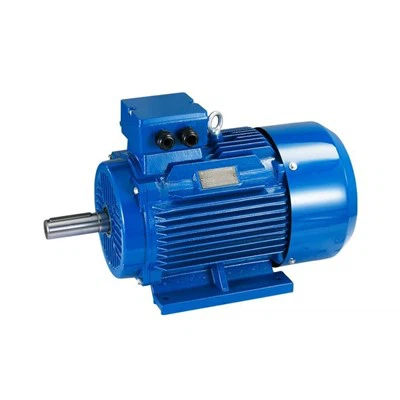
First, let’s get one thing straight: mechanical efficiency isn’t some random number manufacturers pull out of thin air. It’s the ratio of the useful power a motor puts out (that’s the power it actually delivers to your conveyor belt, pump, or compressor, right?) to the electrical power it pulls in from the wall. So if a motor has 92% mechanical efficiency, it means 92 out of every 100 watts you feed it turns into work— the other 8% goes up as heat, vibration, or noise, like a car’s engine wasting gas on idling instead of moving. That’s the simplest way to think about it.
Now, YE3 motors aren’t your run-of-the-mill models. They’re part of the IEC’s efficiency classes, specifically the IE3 standard—you might’ve heard of IE1 (standard), IE2 (high), IE3 (premium). YE3 is our line of IE3-rated three-phase motors, and that’s where their mechanical efficiency gets specific. Most YE3 motors I sell land between 90% and 95% mechanical efficiency, depending on the size. Let’s call out the common sizes because that’s what actually matters to you: a 2.2kW (3HP) YE3 motor clocks in around 91.5% efficiency. A bigger one, say 15kW (20HP), jumps up to like 94.2%, and the 55kW (75HP) model we move a lot for mining operations hits 94.8%. Why the difference? Small motors have more relative losses—think of a tiny lightbulb wasting a bigger chunk of its power as heat than a big one does. That’s just physics, no way around it.
What’s cool about YE3 motors is how they cut down on those pesky losses that drag efficiency down. Unlike older motors that use thinner steel in their cores or bulkier copper windings that leave gaps, YE3 motors use high-grade silicon steel laminations that reduce eddy current losses—you know, that faint hum a motor makes, and the heat that seeps out of its casing. Their windings are precision-wound with oxygen-free copper, which conducts electricity way better than aluminum, so less power escapes as resistance heat. Even the bearings are a step up: we use sealed, low-friction bearings instead of the open ones you see on IE1 motors. That cuts friction losses, which is a big one for mechanical efficiency—if your motor’s bearings are grinding, you’re wasting power just turning the shaft, not doing work.
I get it, you might be thinking: “Yeah, efficiency sounds great, but does it actually save me money?” Let’s do a quick real-world math check, not the textbook stuff. Take that 15kW YE3 motor I mentioned earlier. Suppose it runs 8 hours a day, 5 days a week, 50 weeks a year— that’s 2,000 hours. If it’s 94.2% efficient, versus an old IE2 motor that’s 91% efficient, the difference is 3.2% of power lost. At average industrial electricity rates (around $0.12 per kWh, where I am), that’s 15kW / 0.91 = ~16.48kWh for the IE2, vs. 15kW / 0.942 = ~15.92kWh for the YE3. The difference is 0.56kWh per hour. Over 2,000 hours, that’s 1,120 kWh saved a year. Multiply that by $0.12, and you’re looking at $134.40 in annual savings. That’s just one motor. If you’ve got 10 of these running in your plant? That’s over $1,300 a year—enough to cover a few extra maintenance checks, or a team lunch. And that’s before you get into less downtime, because YE3 motors are built with better parts, so they break less often.
Wait, but let’s not act like efficiency is a one-size-fits-all thing. There are a few factors that can make a YE3 motor’s actual mechanical efficiency a little different from the label number. First, load. If you run a YE3 motor at 50% of its rated power instead of 100%, efficiency drops. It’s like revving a car at half throttle—you’re not getting the sweet spot. We tell customers to size their motors correctly for their load; too big, and you’re wasting power, too small, and you’re overworking it. Then there’s installation. If your motor’s shaft is misaligned with the equipment it’s driving, that adds friction losses, so efficiency goes down. Same with if the motor’s vents are clogged with dust (especially bad in woodworking or construction sites) — it can’t cool itself, so the steel laminations lose efficiency. Oh, and voltage. If the power you feed it is too low or too high, that throws off the magnetic field inside the motor, which hits efficiency too. We always advise customers to test their incoming voltage before installing a YE3 motor, so they can adjust if needed.
A lot of people mix up mechanical efficiency with total efficiency, too. Let’s clear that up. Total efficiency includes all losses: mechanical (friction, bearing stuff), electrical (winding resistance), and core (eddy current, hysteresis). So mechanical efficiency is just the part from moving the motor’s parts, while total efficiency is the whole shebang. For YE3 motors, total efficiency is what gets rated IE3, usually between 91% and 95% for most sizes, which lines up with their mechanical efficiency because they’re built to minimize those mechanical losses. That’s why a YE3 motor will outlast and outsave a lower IE class motor every time.
I’ve been in this game for 8 years, and I’ve seen customers make the mistake of going for the cheapest motor they can find, only to end up paying more in electricity bills and repairs 2 years later. Last year, a small food processing plant I work with had 6 old IE2 motors powering their mixing vats. They switched to YE3 motors, and their energy bill dropped by 11% in the first quarter. That’s not a fluke—those motors’ mechanical efficiency was higher, so less power wasted as heat and friction. They also told me they had to call a mechanic half as often for those mixers, because the YE3 motors’ bearings and windings hold up way better.
Now, if you’re here because you’re looking at YE3 motors and wondering if the efficiency is worth the investment—let’s cut to the chase. If your motors run 1,000+ hours a year, which most industrial ones do, the higher mechanical efficiency of YE3 will pay for the upfront cost in 18 to 36 months, depending on the size. After that, it’s pure savings. And since YE3 motors are IE3 compliant, they meet the energy efficiency rules in most countries now—no retrofitting headaches down the line when regulators crack down on lower efficiency models.
I’m not just some guy who sells motors, by the way. I’ve got a shop floor where we test every YE3 motor before it leaves our warehouse to make sure the efficiency numbers match what we say. We hook them up to dynamometers (that’s the equipment that measures power output and input) and verify that the mechanical efficiency is right where it should be. No cutting corners, no fudging numbers—because if I sell a motor that doesn’t deliver on efficiency, I’m the one who has to explain to the customer why their bill didn’t drop like we said. That’s the kind of accountability you don’t get from no-name suppliers on Alibaba, let’s be real.
So, to wrap this up: the mechanical efficiency of a YE3 three-phase motor is the measure of how well it turns electrical power into useful work, with most models coming in between 90% and 95%, higher for larger sizes. It’s driven by better materials (silicon steel, copper windings, low-friction bearings) that cut down on waste. It translates to real money saved on electricity and less downtime, as long as you install it right and size it for your load.

If you’re tired of throwing money at inefficient motors that break more than they work, let’s chat. We can walk you through sizing, answer any questions you have about efficiency, and get you the right YE3 motors for your operation—no pressure, just straight talk. We’ve got the stock ready to go, and we’re here to make sure you don’t waste another dollar on equipment that doesn’t pull its weight.
Fire Pump References
- International Electrotechnical Commission (IEC). (2020). Rotating electrical machines – Part 3: Efficiency classes of single-speed, three-phase, cage-induction motors (IE-code). IEC 60034-3:2020.
- Department of Energy (DOE). (2022). Energy Efficiency and Conservation Block Grant: Motor Efficiency Guide for Industrial Applications. U.S. Department of Energy.
- Siemens Energy. (2021). Premium Efficiency Motors (IE3) Technical Manual: Mechanical and Electrical Performance. Siemens AG.
- NEMA Standards Publication MG 1-2020. (2020). Motors and Generators. National Electrical Manufacturers Association.
Taizhou Goodpump Trading Co., Ltd.
We’re well-known as one of the most professional ye3 three-phase motor enterprises in China, featured by quality products and good service. Please rest assured to buy discount ye3 three-phase motor in stock here from our factory. For quotation, contact us now.
Address: No. 38, District 6, Zhengye Village, Lunan Street, Luqiao District, Taizhou City, Zhejiang Province, China
E-mail: 19548175755@163.com
WebSite: https://www.goodpump-cn.com/
