As a supplier of medical brushless motors, I’ve witnessed firsthand the critical role these motors play in various medical devices. One of the most significant challenges in the operation of medical brushless motors is commutation torque ripple. This phenomenon can lead to reduced motor efficiency, increased noise, and even affect the precision of medical equipment. In this blog, I’ll explore several commutation torque ripple reduction techniques that we, as a medical brushless motor supplier, have found effective. Medical Brushless Motor

Understanding Commutation Torque Ripple
Before delving into the reduction techniques, it’s essential to understand what commutation torque ripple is. In a brushless DC motor, commutation is the process of switching the current in the stator windings to create a rotating magnetic field that drives the rotor. Torque ripple occurs because the torque produced by the motor is not constant during the commutation process. This is mainly due to the non – ideal back – electromotive force (EMF) waveform, the interaction between the stator and rotor magnetic fields, and the switching of the power electronics.
In medical applications, such as surgical robots, infusion pumps, and ventilators, torque ripple can have serious consequences. For example, in a surgical robot, even a small torque ripple can affect the accuracy of the robotic arm’s movement, potentially endangering the patient. In an infusion pump, torque ripple can cause inconsistent fluid delivery, leading to improper dosage administration.
Reduction Techniques
1. Advanced Motor Design
- Skewed Rotor and Stator Slots
One of the most effective mechanical design techniques is the use of skewed rotor or stator slots. By skewing the slots, the magnetic coupling between the stator and the rotor is more evenly distributed during the commutation process. This reduces the abrupt changes in the magnetic field, thereby minimizing the torque ripple. For instance, in our medical brushless motors, we often design the stator slots with a certain skew angle. This design not only reduces torque ripple but also helps in reducing the cogging torque, which is another source of vibration and noise in the motor. - Optimized Winding Configurations
The winding configuration of the stator also plays a crucial role in torque ripple reduction. Different winding types, such as concentrated windings and distributed windings, have different characteristics. Distributed windings can produce a more sinusoidal back – EMF waveform, which is closer to the ideal condition for reducing torque ripple. We carefully select and optimize the winding configurations in our motors to ensure a smooth torque output. For example, in some of our high – precision medical motors, we use fractional – slot concentrated windings with a specific pitch and turn ratio to achieve a more sinusoidal current waveform and reduce torque ripple.
2. Control Strategies
- Field – Oriented Control (FOC)
Field – Oriented Control is a widely used control strategy for brushless DC motors. It involves transforming the three – phase stator currents into two orthogonal components: the torque – producing component (q – axis current) and the flux – producing component (d – axis current). By independently controlling these two components, the motor can be operated in a more efficient and stable manner. In FOC, the controller can adjust the current in real – time to compensate for the torque ripple. For example, when the torque ripple is detected, the controller can increase or decrease the q – axis current to maintain a constant torque output. We implement FOC in many of our medical brushless motors to achieve precise control and reduce torque ripple. - Direct Torque Control (DTC)
Direct Torque Control is another control strategy that can effectively reduce torque ripple. Instead of controlling the currents, DTC directly controls the torque and flux of the motor. It uses a hysteresis controller to select the appropriate voltage vector based on the error between the reference torque and the actual torque. This method can respond quickly to changes in the load and reduce the torque ripple. However, DTC may have some drawbacks, such as higher current harmonic content. We carefully evaluate the application requirements and choose between FOC and DTC to optimize the motor performance.
3. Power Electronics Improvements
- Soft – Switching Techniques
In the power electronics of brushless DC motors, the switching of the power transistors can cause voltage and current spikes, which contribute to torque ripple. Soft – switching techniques, such as zero – voltage switching (ZVS) and zero – current switching (ZCS), can reduce these spikes. ZVS ensures that the transistor switches when the voltage across it is zero, while ZCS ensures that the switch occurs when the current through it is zero. By using soft – switching techniques, we can reduce the electromagnetic interference (EMI) and torque ripple in our medical brushless motors. - High – Frequency Switching
Increasing the switching frequency of the power electronics can also help in reducing torque ripple. A higher switching frequency allows for more precise control of the stator current, resulting in a smoother torque output. However, high – frequency switching also increases the power losses in the power transistors. Therefore, we need to find a balance between the switching frequency and the power efficiency. In our motors, we use advanced power transistors and optimized drive circuits to achieve a relatively high switching frequency while maintaining acceptable power losses.
Benefits of Torque Ripple Reduction in Medical Applications
The reduction of commutation torque ripple in medical brushless motors brings several benefits. Firstly, it improves the reliability and durability of the motor. Torque ripple can cause mechanical stress on the motor components, leading to premature wear and failure. By reducing torque ripple, we can extend the lifespan of the motor and reduce the maintenance requirements.
Secondly, it enhances the performance of medical devices. In applications where precision is crucial, such as surgical robots and imaging equipment, a smooth torque output ensures accurate and stable operation. This can improve the quality of medical procedures and diagnosis.
Finally, it reduces the noise and vibration of the motor. In a medical environment, noise and vibration can be a source of discomfort for patients and medical staff. By minimizing torque ripple, we can create a quieter and more comfortable working environment.
Conclusion
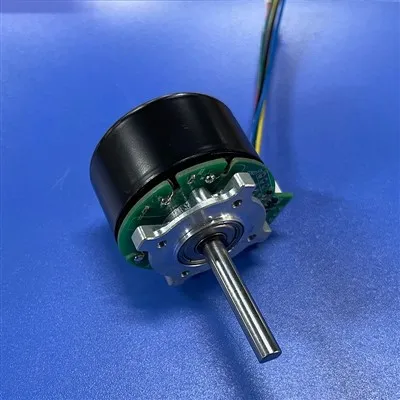
As a medical brushless motor supplier, we are committed to providing high – quality motors with low commutation torque ripple. Through advanced motor design, sophisticated control strategies, and power electronics improvements, we can effectively reduce torque ripple and meet the strict requirements of medical applications.
Automotive Brushless Motor If you are in the market for medical brushless motors and are interested in learning more about our products and how we can help you with torque ripple reduction, please feel free to contact us for a procurement discussion. We look forward to working with you to provide the best motor solutions for your medical devices.
References
- Krishnan, R. (2001). Electric Motor Drives: Modeling, Analysis, and Control. Prentice Hall.
- Boldea, I., & Nasar, S. A. (1999). Electric Drives: An Integrative Approach. CRC Press.
- Zhu, Z. Q., & Howe, D. (2001). Brushless Permanent – Magnet and Reluctance Motor Drives. Oxford University Press.
Shenzhen HengDrive Technologies Co., Ltd.
Shenzhen HengDrive Technologies Co., Ltd. is one of the most professional medical brushless motor manufacturers and suppliers in China, specialized in providing high quality customized service. We warmly welcome you to buy the newest medical brushless motor in stock here from our factory.
Address: Building A & F, FuNing Hi-Tech Park, XinTian Road, FuHai Street, BaoAn District, ShenZhen, GuangDong Province, China.
E-mail: Marketing001@hengdrive.com
WebSite: https://www.hengdrivemotor.com/
